Saturday, September 6, 2008

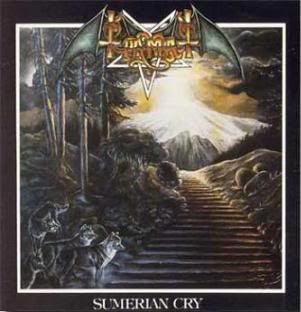
Tiamat - Sumerian Cry (1990)

Photobucket

I first discovered Tiamat, back in high school, when I was trading mix tapes with my Latvian penpal. I was introduced to this band because she included a couple songs from the Clouds album. At the time, I was listening to a lot of melodic stuff from Europe, including Hypocrisy's The Fourth Dimension and Tales From the Thousand Lakes by Amorphis. When I actually sought out Clouds, I was a little disappointed and found it difficult to get into. But then I read about how their older stuff was completely different. That's when I discovered Sumerian Cry.

Sumerian Cry is the first full-length album from Sweden's Tiamat, rising from the ashes of Treblinka. There is a bit of debate regarding the style of music presented on this album, which features tremolo riffs (which were common with Swedish Death Metal bands), blastbeats and a morbid vocal style. The inverted crosses, corpsepaint and spikes should also signal that the band was still striving to create Black Metal, in the same vein as Samael, Grotesque and Imperator. As a matter fact, this is not so far removed from what Mayhem were doing around this same time.

On the other hand, this was recorded in Sunlight Studio and that is very obvious. It has a very similar sound to the early albums from Entombed, Carnage/Dismember and even Soulside Journey by Darkthrone. However, as a point of reference, this album is much more primitive than Darkthrone's debut. Stylistically, there are elements of Black, Death, Thrash and Doom Metal here. While Tiamat does utilize various elements, the aesthetics, lyrics and overall atmosphere seem to be more in tune with early Black Metal.

Sumerian Cry was recorded during late October 1989, making Tiamat one of the first of the well known Swedish bands to record in Sunlight Studio. As previously indicated, the tempo changes quite a bit, throughout the recording, but the blastbeat seems to be fairly consistent. The guitars have the typical, heavy Swedish sound and Hellslaughter's vocals sound possessed! The sinister whispers also add to the darkened atmosphere. The songwriting is pretty primitive, but there are moments that foreshadow the band's more melodic and mature efforts.

The album begins with a short synth/acoustic intro, before the crushing guitars come in and "In the Shrines of the Kingly Dead" is unleashed. This song really sets the tone for the whole album. As a matter of fact, one can notice that this album may have influenced others in the scene, as some of the ideas that were briefly touched upon were later borrowed and expanded upon by other bands, such as Edge of Sanity and even Marduk, on Dark Endless. "The Malicious Paradise" stands out as one of the best songs on here, as well as "Nocturnal Funeral" and "Altar Flame". Two-thirds of the way through this album, one would assume that it is a very solid effort and worthy of some praise...

However, I will warn everyone to avoid the song "Evilized". It had potential to be a decent Black Metal song, but there's some sort of jazz section (yes, I said fucking JAZZ) halfway through. I don't know what the Hell happened there and it was most unexpected. The first time I listened to this, I actually thought the CD player had switched to 'radio' or something. Sadly, this was a harbinger of things to come. Why they had to taint such a good album is beyond me, but it's only a minute or so. Still, I recommend just skipping past this song, entirely.

They salvage the album with the godly "Where the Serpents Ever Dwell/Sumerian Cry pt. 2". This song is extremely slow and doom-laden. The riffs create a very dismal and somber atmosphere. This one song sits alongside "The Malicious Paradise" as the best songs on this album and, possibly, my favorite Tiamat songs.

I strongly recommend this L.P. for fans of late 80s/early 90s Black Metal, such as Mayhem, Samael, Imperator, Grotesque and Necromantia. I would also recommend this for fans of early Swedish Death Metal albums, such as Left Hand Path, Dark Recollections, Into the Grave, Like An Everflowing Stream, Nothing But Death Remains and Where No Life Dwells, though it is best to keep in mind that this album possesses a much darker atmosphere than any of those could hope for.

Brutality - When the Sky Turns Black (1994)

Photobucket

Brutality was formed in the late 80s, in Florida. They played with many well known bands, such as Obituary, Malevolent Creation and Hypocrisy. After releasing the brilliant debut album, Screams of Anguish, they began work on their sophomore effort, When the Sky Turns Black. This album (and its predecessor) is leagues beyond anything else that came out of Florida, around that time.

Let's take a look at some of the competition. 1994 saw the release of Obituary's World Demise and The Bleeding from Cannibal Corpse. Obituary's best days were long behind them and, though Cannibal Corpse managed to put together their best album (which isn't saying much), it still pales in comparison to what Brutality was doing. Brutality was a victim of the explosion of Death Metal bands in the early 90s, but they were far superior to many of them, especially other American bands. Perhaps their more intelligent lyrics weren't shocking enough to draw the attention that Cannibal Corpse garnered. Whatever the case, Brutality managed to release three incredible albums that should never be forgotten.

The title track opens with brilliant tremolo riffs and powerful vocals. The song is somewhat mid-paced, but it's hard to say since the song goes through so much of a progression. The album was recorded at Morrisound, but it's not apparent by listening to it. The production fits the music very well and it has its own identity.

"Race Defects" begins with a quiet, acoustic piece, before blastbeats and tremolo riffs come in. Many of the riffs that this band utilizes would actually make very good Black Metal melodies but this is definitely Death Metal. In some ways, it seems more similar to European Death Metal, rather than their neighbors in Florida. Again, the song varies in tempo from midpaced to extremely fast. And they show one more skill that seems lost on a band such as Cannibal Corpse or Deicide: they play excellent, meaningful solos. Instead of throwing something in, for the sake of doing so, they have taken their time to write very good songs. Nothing is rushed, here.

The listener gets some relief from the violence of the last song as "Awakening" is a quiet instrumental piece. It works well to create a somber atmosphere. In a way, it is like the calm before the storm.

The next song is an amazing cover version of Black Sabbath's "Electric Funeral" and is one of the very few cover songs that I prefer over the original. It is very well done and stays true to the original while also fitting in, perfectly, with the rest of the album. This was actually the first Brutality song that I ever heard. I was hanging out at my best friend's house on a Thursday night, listening to "The Haunted Mansion". By Saturday, I went to find this album. I failed to locate this one, but I did find their new one (at the time), In Mourning. I would eventually have to order this one from Nuclear Blast, since I never could find it on the shelves.

After the epic Sabbath worship, next up is "Foul Lair". This song begins with an incredible solo and mid-paced riffs befitting a Celtic Frost song. Again, the guitarist employs tremolo riffs over a very slow drum beat to create an epic atmosphere. As with the rest of the album, the pace changes at just the right moments. The songs progress, naturally, never feeling forced. Another brilliant solo is to be found in this song. Nothing complicated, but filled with mournful melody. Much like the cover art, that depicts demons hiding in the shadows and waiting for the sun to set, the music creates a very dark atmosphere.

"Screams of Anguish" begins with a chorus of Hellish screams. The song is filled with bludgeoning riffs and remains consistent with the feeling that is conveyed. This song also contains some typical Death Metal groove riffs that I don't find to be terribly useful.

Next is another instrumental, "Esoteric" which is similar to the previous one, in atmosphere. It is very gloomy and almost fools the heartbeats of the listener to slow down...

Then the next song attacks with fury and vengeance. "Artistic Butchery" lives up to its title. At this point, one really has to wonder why the Hell this band was, seemingly, overlooked in favor of inferior groups. Malevolent Creation, Cannibal Corpse, Deicide and Obituary (to name a few of their peers) were all creatively bankrupt by this point yet they maintained the spotlight.

"Violent Generation" signals the impending end and features a lot of interesting riffs. This is yet another instrumental but, unlike the previous interludes, this is a full-on assault on the senses.

The album closes with "Shrine of the Master". Beginning with vicious riffs and a solo that would fit in on an old Testament album, the band truly lives up to its name. With that said, this song seems to be filler. The best riffs from this one and "Artistic Butchery" probably could have been combined to make one song that was better than both of these. "Side A" is probably better than "Side B" but that is a minor complaint.

For any fan of early 90s Death Metal, I recommend that you seek out any Brutality album that you can find. This one ranks just below the debut album, yet it is still much better than many of the better known Death Metal albums from this period.

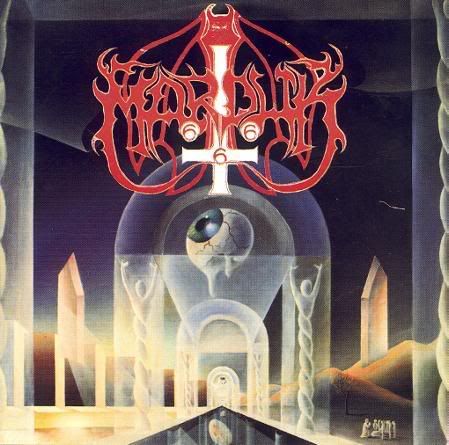
Marduk - Dark Endless (1992)

Photobucket

Dark Endless
is the first full-length from Swedish Black Metal band Marduk. This is the most unique album in their entire catalog, and it is also one of their best. I first discovered Marduk through Opus Nocturne, several years ago. While it was a decent effort, the weak production job made it difficult to enjoy. It was hard to believe that the same guy that produced The Somberlain, Dan Swanö, was responsible for this. At any rate, after this album, I moved forward, instead of backward. Mistake number one. I liked some elements of the Nightwing album, but I disliked the vocalist and the overall production. Anything that the band recorded after that seemed to be nothing but pointless blasting nonsense with no feeling and it completely failed at doing the one thing Black Metal is supposed to do: create a dark atmosphere. So, after being disappointed with yet another sub-par release, in 2001, I gave up on this band and wrote them off. Mistake number two.

Heeding the advice of my girlfriend, I finally gave in and checked out the older Marduk albums. Those of the Unlight was vastly superior to anything that came after, yet Dark Endless soon emerged as my favorite. The first thing that I noticed about this album was that the production is very strong and is much more reminiscent of Swedish Death Metal bands from that era, such as Edge of Sanity. However, this is Black Metal, similar to old Samael and Treblinka/Tiamat. This was released around the same time that the Norwegians were redefining the sound, so it was before everything had to sound like that to be recognized as Black Metal.

There is a lot of variation in tempo, throughout this album. There are fast parts, blastbeats and plenty of tremolo riffs, but it's done with purpose rather than for the sake of being fast. There are a lot of slow riffs that help to create an atmosphere of doom. Minimal keyboard use is present here, to add to this. Every note seems to be played for a reason and they do well to create a dark feeling. The vocals of Andreas Axelsson suit this music perfectly and are typical for Black Metal, being high and raspy. And, unlike most Marduk albums I've heard, there are many memorable riffs and songs. The melodies stick with you even once the CD is over, making you want to listen again. Since the album is relatively short, it is easy to listen to it several times in a row.

Like many bands, Marduk definitely hit their peak early on and this is a prime example of what they were capable of, before wasting time churning out pointless garbage in an effort to impress everyone with how fast and brutal they can be. Standout tracks include "Still Fucking Dead", "The Funeral Seemed To Be Endless", "Dark Endless", and "Holy Inquisition". However, the album is oozing with memorable riffs and melodies, so it's difficult to choose. If you like the old Swedish sound, but you prefer something darker and more evil, seek this out.

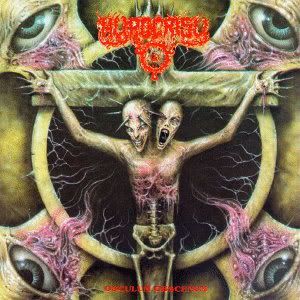
Hypocrisy - Osculum Obscenum (1993)

Photobucket

Over a decade ago, my best friend and I had a Friday night ritual that included meeting up and sharing our latest musical acquisitions. Back then, this was one of the main ways I got into new music (along with college radio and magazines). One gloomy Autumn night, he brought over Osculum Obscenum, the second full-length album from Swedish Death Metal band Hypocrisy. I had heard plenty of Death Metal over the years, but this was beyond all of that; far more evil and far more epic.

"Pleasure of Molestation" begins with a horror intro that really sets the mood for what is to come. It starts out quietly, and one gets the feeling of being pulled into a nightmare. Then, as the song gets going, the sound is not entirely similar to other Swedish Death Metal bands. The music is filled with dark energy and the vocals are extremely rough (almost as if Masse was gargling gravel) and filled with hate. There are many variations with the vocals, keeping things interesting. Similarly, the song includes various tempos. One can hear that it is Swedish, but the influences from American Death Metal, such as Deicide, are apparent as well. However, they quickly show that they are far superior to those who have influenced them.

"Exclamation of a Necrofag" keeps everything going. The bass seems to stand out on this particular song. Other than the heavy sound, this feels a lot like a Black Metal album. This may belong next to Necrophobic's The Nocturnal Silence as one of the earliest mixtures of the two. As the song progresses, there is a very slow part, reminiscent of Where No Life Dwells by Unleashed. This, combined with Peter's eerie guitar solo makes for a sinister atmosphere.

"Osculum Obscenum" begins with some odd effects and a ghastly moaning. The song is very slow and features layered vocals, giving a demonic feel (much like the first Deicide album). Never keeping to one tempo for too long, the song speeds up, quickly. The song is filled with brilliant Black Metal riffs, even if they are sometimes hard to focus on, due to the crushing drums.

By the time "Necronomicon" begins, the listener should really have a keen grasp on what this album is all about. Yet there are still surprises to be found and each song has its own identity. Again, one may notice that Masse's vocals are rough, even for Death Metal. His style is unmistakable and he does well not to sound like every other vocalist out there.

Next up is a crushing cover version of Venom's "Black Metal," which fits in perfectly with the rest of the Black/Death Metal that is featured here. Obviously, this is much heavier than the original.

Abruptly, "Inferior Devoties" starts up and continues the Satanic Death Metal onslaught. Later in the song there is a good Black Metal riff that doesn't quite get time to breathe, but it makes no difference as the pace slows down and an epic feeling is created with the slow riffs and chanting. However, this does not last long and the song marches forward, seeing the return of the aforementioned riff.

"Infant Sacrifices" is filled with evil, blasphemy and hate. This is what Death Metal should sound like. This song again displays Peter Tägtgren's ability to utilize epic riffs.

And now we come to the most epic song on the whole album, "Attachment To the Ancestor." Slow, doomy riffs fill the listener with a sense of dread and impending doom. The low, whispering voices and acoustic guitar add an eeriness. It becomes apparent that Hypocrisy really shine through during the slower moments, and this is the slowest song on the album. That is not to say that there is no variance in tempo. The song does, indeed, speed up for a bit. Everything is perfectly timed and structured to create the darkest feeling possible. This song is definitely one of the highlights of an album filled with brilliance.

"Althotas" is a great song to close the album with. This one song features Black, Death and Thrash riffs. There seems to be a little added desperation to the vocals and the melodies definitely give the feeling that this is the last assault before the end. The song then slows way down, with a fast tremolo melody playing along with the keyboard outro. Everything continues to slow down to an absolute crawl until there's nothing left but the brief horrific sounds that began the album. Simply one of the best endings to an album, period.

This album is evil and dark Black/Death Metal the way it should be. When compared to other Death Metal albums of the same period, this absolutely kills nearly everything. Eerie guitar work, Hellish screams, epic riffs... This is a classic and stands out as being above and beyond the majority of Hypocrisy's other works. This is the most solid and consistent album that they ever recorded. Buy this or kill yourself.

Monday, April 28, 2008

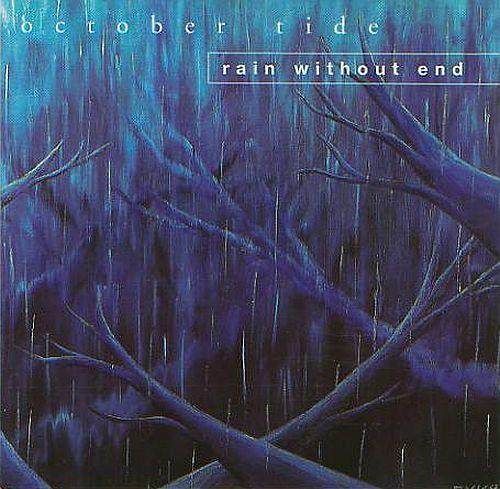
October Tide - Rain Without End (1997)

Photobucket

Rain Without End is the first full-length from October Tide, a side project of members from Sweden's Katatonia. Appropriately enough, I first discovered this album on a rainy day, many years ago. As I write this, the sky is gloomy and the cold rain has been falling for hours. A perfectly miserable atmosphere for such bleak music.

October Tide's debut L.P. was recorded in 1995, between Katatonia's For Funerals To Come E.P. and the Brave Murder Day album, despite not being released until 1997. This album has the distinction of featuring the final harsh vocal performance of Jonas Renkse, as he had tortured his throat beyond repair.

Stylistically, October Tide does not deviate from the established Katatonia sound of this era. One may wonder why this album was released under a different name, since it features the same melodic Doom Metal found on Katatonia albums. One reason may be that Anders Nyström was preoccupied with other projects, such as Diabolical Masquerade.

What one finds on Rain Without End is a more coherent version of Katatonia. The riffs are mid-paced doom and the trademark melodies and acoustic passages are present. Average song length is roughly five to six minutes. There's enough variation to keep things moving, yet not so much that is distracts from the flow of the song. The somber melodies and tortured vocals work, beautifully, to create a very bleak and dismal album that is unmistakably Swedish.

Standout tracks include "12 Days of Rain" and "Infinite Submission". This is nearly impossible to find, without paying a small fortune, as it has been long out of print. If you see it somewhere, do yourself a favor and pick it up. Fans of old Katatonia will not be disappointed.

Wednesday, April 2, 2008

Unleashed - Where No Life Dwells (1991)


Where No Life Dwells is the first full-length album from Unleashed. It is also one of the first Swedish Death Metal albums that I heard, many years ago. To be honest, I wasn't quite sure what I was hearing at the time, since most of my Death Metal experience had been with American bands. I was also getting into a lot of second wave Black Metal bands, around this time. The spirit of this album seemed to fall in line more with the Black Metal that I had been listening to, rather than Death Metal. Of course, the obscure cover art and even the inverted cross that is bound in with the logo added to this perception. I discovered this around the same time that I was first exposed to albums such as Left Hand Path, Like An Everflowing Stream and Into the Grave. This was something darker and colder than any of those.

In 1989, Johnny Hedlund found himself ejected from Nihilist, thus moving on to form Unleashed. After a series of demos, the band was signed by Century Media Records. In April 1991, they went to Woodhouse Studios in Dortmund, Germany to record their debut L.P. Where No Life Dwells does not possess the same sound as the many Swedish Death Metal albums that were recorded in Sunlight Studio, under the watchful eye of Tomas Skogsberg. While this does share some characteristics with bands such as Entombed, Carnage / Dismember and so on, it is also quite different. Indeed, the music of Unleashed embodied a lethal coldness of a brutal winter storm, offering no mercy in its attack while destroying all in its path.

The album begins with "Where No Life Dwells", a brief and fragile acoustic intro that is absolutely torn to shreds by the barbaric assault of "Dead Forever". This is a fitting portrayal the band's world view. The song erupts with crushing mid-paced riffs and an overpowering roar. The riffing alternates between fast tremolo riffs and slow power chord breaks. The drum work isn't something really outstanding yet it's extremely frantic and fits totally with the riffing. The bass isn't very prominent and is mixed down with the guitar riffs giving their already dark sound a lower range. The vocals of Johnny Hedlund are dry and cold. They are similar yet different from the classic Swedish style, being very rough (but not too deep) with occasional piercing screams of mortal horror. Guitar solos are short yet intense fast tremolo that have the same tone of the rhythmic guitars.

This album possesses more of an old school feeling than many of its peers, as there are many galloping riffs and thrashy sections, as seen on "Before the Creation of Time". This alternates with the faster tremolo riffs and blast beats that seem to come out of nowhere, thus maximizing the effect. However, where the band truly shines is during the slow power chord breaks, as this allows the your mind to drift into the gaping abyss.

The sound on this album is immensely heavy, with the drums given a pounding, hammering presence through music that takes on the form of a deadly nighttime blizzard. This has a very cold sound to it, but not quite the same as listening to early Darkthrone. An album like Transilvanian Hunger freezes you with bitter cold winds shredding through your flesh. Where No Life Dwells is more like being crushed between two sheets of glacial ice.

As the previous song ends, you hear icy blizzard winds blowing over the frozen plains which serve as an intro to "The Dark One". This song begins with an atmosphere of pure doom. The slow riffs transition, suddenly, into a frostbitten blast of tremolo riffs and pounding drums. Hedlund's dry screams are filled with fury. The rage found here is tempered by a descent into a slower passage, anchored by mid-paced double bass. The guitars then re-emerge from these darkened depths to revisit the previously established theme. This is probably one of the best songs on the album. Also worth mentioning is that the lyrics are inspired by Tolkien.

The lyrical themes of this album are, mostly, anti-Christian but there is also a strong Viking Metal approach as many songs speak of great battles and approach death as an unavoidable fate for all those who live, yet this grim destiny must be faced with courage. "Into Glory Ride" embodies this spirit quite well, and mentions Odin, Thor and Valhalla. This would seem to foreshadow the type of themes that Unleashed would become most known for.

"...And the Laughter Has Died" begins with much the same barbaric fury as can be found all over this album, yet here we find some of the darkest atmosphere created by this band. In the heat of battle, you have been fatally wounded. The blood is pouring from the gaping wound in your chest. As the riffs slow down, a truly haunting and abysmal lead melody coils around your cold body, suffocating you near total lifelessness. A terrified shriek wakes you from this dark winter nightmare. The song speeds up, once more, as you realize that the battle is not quite finished.

As through many of the songs, "Where Life Ends" features many slow doom riffs that are accompanied by the double bass rumbling beneath, creating a suffocating feeling. The only complaint here would be the lack of the funeral bell that was on the version of this song found on the ...And the Laughter Has Died E.P. as it added a nice touch.

At its most energetic, the songs on Where No Life Dwells carry an absolutely barbaric feeling. During the slower sections, the atmosphere is dark and filled with dread. As with most bands, Unleashed made their defining statement with the first L.P. so this one is the most essential of their catalogue.

Tuesday, April 1, 2008

Darkthrone - Soulside Journey (1991)


The band that would become Darkthrone formed during 1986 in Kolbotn, a small suburb of Oslo. They were a death metal group by the name of Black Death, and its members were Gylve Nagell, Ivar Enger and Anders Risberget. In 1988 the band changed their name to Darkthrone and were joined by Ted Skjellum and Dag Nilsen. During 1988 and 1989 the band independently released four demo tapes: Land of Frost, A New Dimension, Thulcandra, and Cromlech. As a result, the band was signed by Peaceville Records.

Early on, they appeared to have ties with some members of the Swedish Death Metal scene, as Tomas Lindberg (of Grotesque / At the Gates) assisted in the creation of the Darkthrone logo and Uffe Cederlund (of Entombed) was present in the studio during the recording of their debut L.P., Soulside Journey, in 1990. The album was produced by Tomas Skosgberg, in Sunlight Studio (known for such albums as Sumerian Cry, Left Hand Path, Dark Recollections, et cetera). This is the only Death Metal album that the band recorded, as they went for a primitive Black Metal style, not long after this was released.

Soulside Journey begins with a brief, horror-inspired intro before the song "Cromlech" comes thundering in. To those not familiar with the band's origins, it may sound strange to hear technical Death Metal from these guys, but here it is. One of the first things to notice is the fast tremolo riffs. This style was already somewhat common in Swedish Death Metal, yet Darkthrone utilized these riffs far more efficiently. This goes to show that the band didn't change so drastically, with the albums that followed this. As for differences, Nocturno Culto's vocals are deeper, yet not too deep, and Fenriz is quite active behind the drum kit, showing his high level of skill.

"Sunrise Over Locus Mortis" continues down the same dark path as the first song. There are a lot of tempo changes on these songs and quite a bit of doomy atmosphere created during the slower sections. In those early years, it didn't seem to matter what Darkthrone did. Whether they were playing Death or Black Metal didn't make a difference, as they excelled at both. Honestly, there wasn't much of a reason to continue with the same musical direction after this album as they had accomplished something great.

The opening moments of the title track sounds pretty close to what the band would be doing a couple years later, beginning with cold tremolo melodies and fast drums. Of course, the speed does not remain the same as there are so many different riffs and tempo changes. Even on the instrumental track that follows this, "Accumulation of Generalization", it is clear that the riffs are the most important thing to this band, despite Fenriz's technical prowess being difficult to hide. The atmosphere, throughout the album, is one of horror and doom, as one can easily gather from the opening moments of "Neptune Towers". When keyboards are used, it is very sparingly and only to add to the dark atmosphere, like a horror score.

"Sempiternal Sepulchrality" is, possibly, the most energetic and thrashy song on the album. This is filled with riffs and is one of the faster and more aggressive songs found here. This is counteracted by "Grave With A View", which returns to the doomy atmosphere and features a nice part in the beginning, with some chorus of demons calling from beyond. This song also features a brilliant solo. Nocturno Culto truly excelled when it came to lead solos, far beyond many of his peers.

As "Iconoclasm Sweeps Over Cappodocia" plays, one cannot help but think that Soulside Journey features more use of the freezing cold tremolo riffs than many of their other albums. They are separated by many doom riffs and even some thrashier moments, yet they are all over this album. Songs like "Nor the Silent Whispers" and "The Watchtower" display influences that range from old Slayer and Kreator to Death and even Black Sabbath.

The album concludes with "Eon", a brilliant instrumental that features some use of keyboards to accentuate the dark and foreboding atmosphere, possessing a sinister and twisted feeling quite similar to the score of a 70s horror film. There is also a very noticeable Death influence found here.

There is some debate as to what subgenre this belongs to, as the lyrics and atmosphere, as well as many of the riffs, seem to belong to Black Metal. However the percussion and the song structures, despite the unorthodox timing, belong very much to Death Metal. The vocals also lean more in this direction, as well. Whatever way you wish to classify this album, you must appreciate the music

For those who seem to think of Darkthrone as terrible musicians because of the primitive and minimalist path that they chose after this, you really need to give this a listen and realize that it was, indeed, a choice. Many that wish to emulate them simply hide behind the low-fi production and primitive musicianship because that is all that they're capable of. The members of Darkthrone are masters of creating dark atmospheres, regardless of the way in which they set about achieving this.

This is recommended to those wishing to see the early days of this band. Also, for anyone into the early Swedish Death Metal bands such as Tiamat, Entombed, Carnage / Dismember, Unleashed, et cetera, this will probably appeal to you, though this has as many differences as similarities with the early albums from those bands. This is actually far superior to most (if not all) of them.