Tuesday, December 23, 2008

Dissection - Where Dead Angels Lie (1996)


Where Dead Angels Lie is a classic E.P. released in April 1996, by the mighty Dissection. This has to rank alongside Haunting the Chapel as my favorite E.P. ever. The search for this particular release took a little longer than I'd have wished, but it was well worth the wait.

It begins with a demo version of "Where Dead Angels Lie". Where this differs from the studio recording is that it is much more raw and features a slower pace than on Storm of the Light's Bane. In some way, this only adds to the ominous and eerie atmosphere. Instead of ice cold razors, slicing through your skin, it feels more like rusted hammers, crushing your bones. The vocals are a little different as well, being a bit more Hellish and raw, aat times. It is interesting to hear how the song sounded in an earlier form, and to then compare it to what was released later on. Often, demo versions aren't very good and are more of a curiosity than something to actually enjoy. That's not the case here. This is quite essential, in my view.

The next song is a cover of Tormentor's "Elisabeth Bathory". The band does an excellent job capturing the feeling from Anno Domini, and Jon even does a good job emulating Attila's vocal approach. As much as I love Tormentor, this cover equals the original, at the very least. The execution here is perfect in every way.

This is followed by my one of my favorite songs on this E.P., a cover of Slayer's "The Antichrist". One can truly feel the passion that went into this and assume that the band has an extreme fondness for old Slayer. Everything is crisp and pulled off very well. Being an old Slayer fanatic, I can't put this over the original, but it's one of the best Slayer covers I've ever heard. It's quite an interesting and enjoyable listen.

"Feathers Fell" is similar to the version found on The Somberlain, though this contains whispered vocals. It creates a calm effect, though I prefer it without any vocals of any kind.

"Son of the Mourning" is next, and is a re-recorded version of an older Dissection song, from the Into Infinite Obscurity E.P. The vocals are pure Hell and add a lot of intensity to the song. The production is vastly superior to the earlier recording, though still fairly raw. It is short and goes directly for the throat, not wasting time with anything else. Next to "The Antichrist", this is probably the best song on here...well, with the exception of the title track.

The final song on here is the L.P. version of "Where Dead Angels Lie". This brilliant song has already been covered in my review for Storm of the Light's Bane. A true classic and an excellent choice for the E.P.

Most of these songs are available on other releases, these days, but I recommend any true Dissection fan to seek this out anyway, as it deserves to be appreciated as a separate release. One of the best E.P.s ever.

Saturday, December 6, 2008

Gorgoroth - Antichrist (1995)


Antichrist is the second Gorgoroth album, released in 1995. This album is very much in the vein of its predecessor, Pentagram, while maintaining an identity of its own. This album introduces a new vocalist, Pest (of Obtained Enslavement), while also featuring Hat on some songs as well. Handling the drumming duties on this outing is Frost, of Satyricon, utilizing a more minimalist approach to suit the music.

It is difficult to process how one man can write so many brilliant guitar riffs, yet Infernus seems to do so with ease. His influences are not hard to discern, yet they come together in a distinctive style. Also, while creating raw Black Metal, Gorgoroth always maintain a high level of power in their compositions.

The album opens with a brief intro, "En Stram Lukt av Kristent Blod". This is not particularly noteworthy and adds very little to the album, really. The true beginning of the album is "Bergtrollets Hevn". This song shows the same type of melody as on Pentagram, with slight progression. Hat's vocals maintain the very raspy approach from the previous album, though seeming a little more in control. Frost employs some old school drum beats, in the beginning and end, unleashing double bass throughout. Following a couple verses, a short break leads the listener into a crushing acceleration, which will give way to the return of the opening riff at the end, accentuated by Hat's screams. The song ends with the sound of winter winds blowing across the desolate landscape.

The winds lead into one of the best riffs ever created, as the song "Gorgoroth" begins. This is, definitely, one of the highlights of the band's career, alongside "Maaneskyggens Slave". Beginning abruptly, the fast tremolo riffs and blastbeats are reminiscent of Transilvanian Hunger; the layers of guitar and bass work well to create a somber atmosphere. This song progresses narratively, building up climactic tension with every part towering over the previous one with a dramatic increase of passion. It starts out on an extremely high level already. A high-pitched, vibrant and humblingly epic lead hovers over crushing blastbeats, commanding attention on its own, and in a move only few bands can manage to pull off, lead and rhythm change places. The lead remains the same, but the instruments at lower pitch that previously only provided the simplistic, high-speed background take a lead role by morphing into a memorable, beautiful accentuated melody at moves into the foreground, amplifying the epic character of the opening part's atmosphere. After this introductory theme has reached the peak of its build-up, it is released into the triplet-beat that is all too common in Black Metal, but that only few bands can pull of as well as Gorgoroth do here. It is hard to describe how captivating the combination of rhythm, riff and vocal performance is, it is simply stunning. There is some variation in the form of drumless pieces of atmospheric build-up to enhance the emotional experience even more. The guitars are quite similar to early Mayhem ("Life Eternal") or Burzum, while the drum work is similar to old Bathory. A short guitar solo finishes the triplet-based part, and you can hear that this solo was put in merely for effect, to ease the listener into the final parts of this song, which then pre-climaxes in the kind of lead only Infernus could write, then when you thought you had reached the absolute highest point, it gets better, and even better after that. After the neck-breaking lead you had probably first mistaken for the climax, a second short solo a lot more beautiful than the last thrusts the emotional threshold even higher, and just seconds later, a brilliant part carried by clean, mournful vocals carries the song into the majesty of the night sky.

"Possessed (By Satan)" begins with a very old school feeling. A Celtic Frost influence is apparent, at first, then the song continues with more of a galloping drumbeat. The song speeds up, mid-way through, with memorable riffs, before returning to the previous theme. Pest's vocals also display a noticeable accent, which I haven't noticed in much o fhis other work. It adds to the feel, nicely.

"Heavens Fall" is an instrumental that would not have sounded out of place on Pentagram. Halfway through, the pace switches to an old Hellhammer/Celtic Frost rhythm, followed by a couple screams from Pest, before galloping toward the battlefield.

The final song, "Sorg", is another highlight of this album. The sound of thunder and rain, accompanied by bells, remind one of the song "Black Sabbath". This is a Black Metal funeral march. The atmosphere is one of sorrow and the vocals are sparse and suit the music well. Here, again, Hat utilizes clean vocals, sounding like a choir of the damned. The song is very slow-paced and melodic. It is like a dark journey through the cold gravelands. Despite being raw Black Metal, the production is quite clear, as on Pentagram. Some of the riffs, near the middle, are reminiscent of Black Sabbath, though not as obvious as Ophthalamia's debut. The last verse is again sung with clean and somber voice, and Hat's last note is made longer by a very strong reverb, left alone to fade away slowly, slowly... The silence is broken by more thunder and the sounds of the falling rain as this classic album fades to black...

Overall, there is little to complain about, regarding this release. It is a bit short, but accomplishes what it intended to within that time. It's not quite the monster that is Pentagram, but a worthy follow-up, nonetheless.

Friday, December 5, 2008

Hypocrisy - The Fourth Dimension (1994)


The Fourth Dimension is the third full length album from Sweden's Hypocrisy. Following Osculum Obscenum, the band went through some changes as Masse Broberg left the band and Peter Tägtgren assumed the duties of vocalist. The Inferior Devoties E.P. served as a transition from old to new, yet none would have been prepared for what was revealed on The Fourth Dimension. Lyrical themes had not yet changed as drastically as many seem to think, based on the title track. Anti-Christian sentiments can still be found, though there is a more mystical and otherworldly quality to the bulk of the lyrics, as opposed to the blatant Satanic nature of the first two albums.

Late one Thursday night, I was listening to "The Haunted Mansion" and was fortunate enough to hear the song, "The North Wind". This song possessed a sorrowful quality that I had not heard on the earlier Hypocrisy albums, and I was immediately drawn in. I made this discovery back in high school, long before my days of purchasing music on the internet, so it took quite some time to locate this album. I had just recently gotten Abducted, not long before, and was eager to fill in the gap and see how things evolved.

The album begins with "Apocalypse". The song starts off with a somber keyboard intro and crushing guitar riffs that fade in and out. This is quite a departure from the Satanic war unleashed in the early moments of the previous L.P. This song is mid-paced, showing Doom Metal influences. Peeter's vocals are not far removed from Masse's, yet he manages to also incorporate a few screams and even mournful chants. This song is very epic in nature and one of the classics of Hypocrisy's career.

"Mind Corruption" speeds things up a bit, showing an influence from Carcass. In interviews, Peter mentioned that he wanted this album to sound like Heartwork, being impressed with that album, but was disappointed that it didn't quite turn out like that. Despite the thrashing riffs, this song doesn't entirely shed the atmosphere that was created by the opener. The vocals and, especially, the solo manage to maintain this dismal feeling. Lyrically, it seems to continue with an anti-Christian theme, though not Satanic.

"Reincarnation" is a bit slower and sorrow is dripping from the solo and many of the riffs. It would appear, by this point, that the earlier Florida Death Metal influences have vanished, altogether. While not as slow as the first song, it is quite down-tempo.

The next song goes in the opposite direction. "Reborn" begins like a razor through your flesh, being much faster than the previous songs. The fast tremolo riffs are quite reminiscent of Black Metal and really shine through around the mid-section, where they take center stage. The solo is fast and quite similar to earlier albums. Songs like this maintain the ties with the old works.

"Black Forest" is another mid-paced song. It seems that this is when Hypocrisy really reaches their potential. The riffs are gloomy, like a cold and grey Winter day. The song picks up a bit, with some thrashier riffs in the middle, building the tension while carrying things forward. Some of these riffs would have fit, perfectly, in Osculum Obscenum. After slowing down, briefly, things pick up with a furious solo that then fades into a very bleak and obscure Black Metal riff that is one of the highlights of the album, while also being a very miserable melody that could have been expanded into a song of its own.

"Never To Return" possesses a relaxed pace, while not necessarily being slow. By this time, it is obvious that this album was creating beneath a dismal sky. The atmosphere of sorrow and grief hangs over this, making it difficult to breathe. This song is where the Carcass influence is most prevalent, as a solo is outright stolen from Heartwork. However, wheras Carcass hinted at brilliance and then opted to jump into the next riff, Hypocrisy added to this and allowed it to progress, naturally.

The next song is another throwback to previous albums. "Path To Babylon" almost seems out of place, as it displays somewhat of a shift in direction. This song is much faster and thrashier than the previous two. Faster, more aggressive songs like this probably serve as a break between some of the more miserable, depressing songs, and helps to keep the listener from being completely lulled into a trance. With that said, there is a slower section, late in the song.

"Slaughtered" begins only with drums and bass, creating an ominous feeling. The riffs come in slow and powerful, and the vocals seem to carry more anti-religious sentiment. This particular song could have used a little more work, in my opinion. It is one of the less interesting pieces on this album.

"Orgy In Blood" picks up the pace, once more, yet just doesn't possess the fury of the old albums. While not being bad, at all, the faster songs on this album don't seem to come close to Penetralia or Osculum Obscenum. Where The Fourth Dimension impresses is with the slower, sorrowful songs. However, this song does possess a little bit of this atmosphere, later on.

"The North Wind" was the first song I heard, from this album. This one is well crafted, featuring several changes in pace. The fast parts work well and the slow dirges drag the listener into the depths of the abyss.

"You will stop breathing, as you pass away. Suffocate...Your skin turns blue."

These lyrics are conveyed quite well, as the riffs seem to inspire just such a feeling. As always, Hypocrisy manages to keep a blackened feel to their music. This song is one of the highlights of the album.

"T.E.M.P.T." begins, again, with a faster pace. It seems a little out of place, as it makes too much of an abrupt change in the atmosphere and progression of the album, filled with tremolo riffing and fast drums. However, after a minute or so, it slows down. This is much more fitting of its position on the album, though I'd still have placed it before the previous song.

The other bookend of darkness and despair is the title track, "The Fourth Dimension". This song is as slow as the opener and has the same epic, Doom Metal atmosphere. Here, the otherworldly themes are most obvious, which foreshadows the two albums that follow. The lyrics and vocals convey terror and fear.

"Wake me up from this nightmare."

The song has almost an oppressive feeling, despite the cold and distant production of the album. This is the kind of song that you don't simply listen to; you experience it. The haunting melodies and tormented screams convey the appropriate feelings. While failing in the goal of creating an album similar to Heartwork, Hypocrisy managed to record something far superior.

The album closes with the brief outro, "The Arrival of the Demons". It is eerie and sorrowful, serving as a prelude to Abducted. Listening to this, one can feel life and hope slip away, like the final gasps of breath for a dying man. The Fourth Dimension is like an epic journey for the listener, and it is in these final moments that it takes its toll and leaves you for dead...

Sunday, November 9, 2008

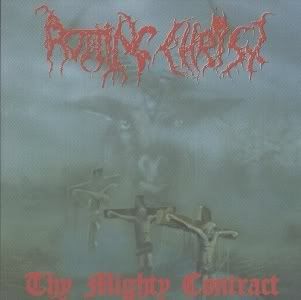
Rotting Christ - Thy Mighty Contract (1993)

Photobucket

Thy Mighty Contract is the first full-length album from Greece's Rotting Christ. After some demos and EPs, the bands sound shifted from a more grindcore sound toward Black Metal. This album is very symbolic for the band, as it possesses the raw and aggressive feeling from the early days while also displaying the melody and dark atmospheres that the band would come to be known for.

I discovered Rotting Christ while listening to "The Haunted Mansion", several years ago. The song, "Iced Shaped God", was from the band's second LP, Non Serviam. It took a long time for me to track that down, and I actually only acquired it due to my girlfriend's kindness. After properly digesting that album, I sought more Rotting Christ but was not as pleased with Triarchy of the Lost Lovers. Over a year would pass before I got my hands on Thy Mighty Contract, which impressed me from the very first listen.

"The Sign of Evil Existence" begins with a very ominous tone. The usual staccato rhythmic, yet melodic, riffing is present from the very start along with some added keyboards for effect. The build-up is brief, but effective. This song unleashes lightning fast, razor-sharp riffs and high, raspy vocals. The album immediately slices the listener's throat with this one. It's brief, but definitely sets the tone for things to come.

"Transform All Sufferings Into Plagues" is next, and begins much slower than the previous song. It is reminiscent of early Tiamat or Varathron, in the atmosphere and approach. This song features nice harmonized riffs, as well as some slower doom riffs and even some keyboard usage. There is a nice solo, near the end, before the pace slows back down.

There is a strong Heavy Metal influence to this album, which is very apparent. Also, the bass has a more prominent role, at time, giving a more organic feel to the music. Often, the harmonized riffs are supported by slower power chords, giving an epic feeling of doom. There is no shortage of memorable riffs on Thy Mighty Contract, which is pretty typical with Greek Black Metal. The vocals range from the dry and raspy vocals, heard on the opening song, to more throaty deathlike vocals. They synth is present only when needed, adding to the atmosphere but never overpowering the sound. This is handled by Magus Wampyr Daoloth of Necromantia, who also provides some vocals. "Exiled Archangel" even features a spoken passage. One of the true hihglights of this album (there are many) has to be "The Coronation of the Serpent". From the evil and instense beginning, this song goes on to be quite epic in nature. This is a good lead-in to the final song, "The Fourth Knight of Revelation".

On this album, Rotting Christ does well to combine the occult Black Metal atmosphere with the melodic Heavy Metal influences and create something mystical and unique. Along with Varathron's His Majesty At the Swamp and Necromantia's Crossing the Fiery Path, this is one of the cornerstones of Greek Black Metal and it is highly recommended that you pick this up or suffer impalement.

Thursday, November 6, 2008

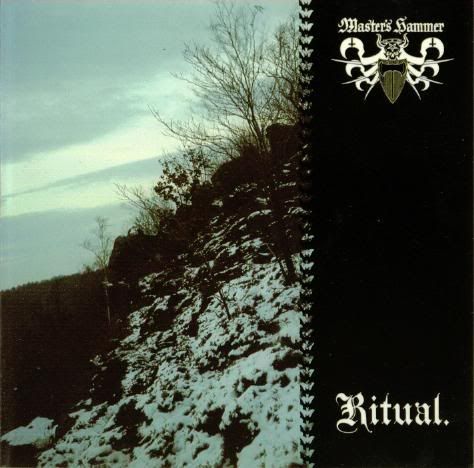
Master's Hammer - Ritual (1991)

Photobucket

Master's Hammer was a Black Metal band from the Czech Republic. They were from a time just before the Scandinavian sound came to be the be all and end all of the genre. This band has more in common with Tormentor, Imperator, Samael and Rotting Christ. I got into this relatively late, as it wasn't something that was common among people I've met. In truth, I rarely ever hear anyone talking about this band, at all. Ritual is the first full-length by this band, though they were around for many years prior to releasing this.

Many seem to have the misconception that Black Metal all sounds the same. In the early days, there was quite a variety. Even by the early 90s, there was still distinctive qualities between different bands. It was after the explosion of the Norwegian scene that the later bands decided that they must focus only on these influences. However good the early Norwegian bands were, that sound does not encompass all that Black Metal is.

The album begins with an intro, suitable for a horror score. This helps to establish an obscure atmosphere and leads into the first song, "Pád Modly". Immediately, one can sense the old school metal influences. The riffs are absolutely brilliant and this oozes metal. The vocals are completely different from anything I've ever heard, maintaining a very distinct style. Surely, the Czech language adds to this. There is such power and feeling in the music and the vocals. This is epic and the memorable riffs will continue to haunt the dark recesses of your brain for some time.

"Každý Z Nás" continues in the same vein, while remaining entirely distinct. Still present are faint keyboards, used to accentuate the atmosphere, not create it. Master's Hammer manages to sound evil as Hell without a grim or minimalist approach to songwriting. This is filled with metallic power, much like the early Black Metal albums.

The next song is the instrumental title track, "Ritual" which features brilliant thrash riffs and is like a mini-epic, similar in feel to Mercyful Fate. This is meant to be listened to at full volume. If this doesn't inspire you to set fire to a nun and defile her as she burns alive, then something is wrong with you.

"Geniové" is a bit different, featuring some chanting. This song gives the feeling of being on a long journey, with no end in sight. Perhaps riding through the mountains on a black horse, tired and covered in the blood of your enemies. All that you possess is your sword and a canvas bag full of their heads.

"Černá Svatozář" is next and begins with a thrashy build-up. This is one of the most perfect Black Metal albums recorded. Surely, they had many years to work on these songs. Far from being raw, the sound is powerful and the production is rather clear. In this case, it suits the music well. By this song, one begins to wonder how each song can truly stand out so much. There is no filler on this album. The epic, thrashy riffs and frantic vocals are joined by a killer solo, near the end of the song.

The next song is "Věčný Návrat", which begins with a wall of razor-like thrash riffs that assault the listener as the manic vocals soon join in. This song contains another wicked solo that is somewhat reminiscent of the theme from the Twilight Zone. The assault doesn't let up as "Jáma Pekel" is as fast and unrelenting as the previous song. This song, especially the chorus, has an anthemic quality to it. The guitar solo, at the end, is a nice touch as well.

"Zapálili Jsme Onen Svět" begins with a darker riff than the previous songs. As the drums and insane vocals come in, the the song slowly builds up in a great piece of nightmarish Black Metal. This blasts right through the gates of Hell and casts you at the feet of Satan himself.

"Vykoupení" is one of the last stops before the Ritual nears its completion. This song begins with only a sorrowful guitar riff and sparse drumming, before the rest joins in. For a brief moment, it gave the impression of being stranded at the top of a lonely mountain, in utter darkness, calling out into the shadows. The vocals and the guitar melodies have an extra sense of desperation and sickness. There is a sense of tension created with the guitar melodies that is well suited for building toward the end of the album.

Ritual ends with the masterpiece, "Útok". Even on an album filled with such great songs, this one manages to stand out as quite exceptional. It begins with a brief bass riff before everything else kicks in. The riffs here are even darker than the rest. This morbid epic is like a funeral dirge, at times, and contains some of the best melodies of the whole album. The vocals are inhuman and anguished, really reaching a climax with this song. There is almost a touch of real insanity in there. At times, it is reminiscent of Chopin's "Funeral March".

This album is as much metal as it is black, something that is often avoided in recent years. Master's Hammer created something majestic and unique here and it is a shame that they fell into decline shortly after this. However, nothing will take away from this monumental album. Seek this out, at any cost.

Sunday, November 2, 2008

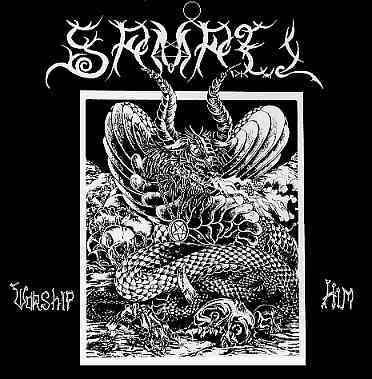
Samael - Worship Him (1991)

Photobucket

Samael are from Switzerland, the same country that spawned Hellhammer. Worship Him displays the inevitable influence that this band had on Samael, as well as other early bands, such as Venom and Sodom. This obscure and occult band rose in between the first and second wave of Black Metal. This possesses a very dark atmosphere, as if in a deep dungeon illuminated by torches, preparing for black rituals.

I discovered Samael in high school, through my best friend. I recall recording this album from him and listening to it for the first time while taking a long drive, through the winter night. That memory has never faded, nor has the impression this dark album made on me that night.

After a short horror intro, the album begins with "Sleep of Death" which is one of the faster songs on here, while not being excessively fast. The bass drum work gives the impression that it's faster than it is. Despite this, the guitars maintain a dark and occult tune, inspired by Hellhammer. The vocals are similar to what Abbath would use, a couple years later, on Diabolical Fullmoon Mysticism. The lyrics on this album keep to esoteric and occult themes. At certain times, such as on the epic masterpiece "Into the Pentagram" there is a bit of a shriek to the vocals, but nothing too extreme.

"Worship Him" alternates between, somewhat, faster parts and slow, crawls. The guitars really dominate this album and often play open chords to give more of this doomy feeling. This is pure Black Metal. While Darkthrone was still a Death Metal band, Samael had already taken the spirit of Hellhammer and carried it to its logical conclusion, as heard with "Knowledge of the Ancient Kingdom". This song bludgeons the listener with its sheer power. The assault continues with "Morbid Metal", which speeds up the attack. This song is reminiscent of "The Third of the Storms". This song crushes your body under the weight of old tombstones and then hacks off your limbs with a rusty axe. The thrash riff, near the middle, wouldn't be out of place on a Sodom or Kreator album. Immediately following this, the song begins to descend into the pits of Hell. The atmosphere changes to one of dread and demonic voices surround.

"Rite of Cthulhu" is a brief instrumental piece, featuring a doom atmosphere created with open chord notes, followed by a bit of thrash. This serves as a half-way point in the album and lulls the listener into a sense of calm before "The Black Face" is unleashed. This song begins slowly, before speeding up and assaulting the listener. The vocals here contain a sense of desperation. Following this is the highlight of the album, "Into the Pentagram". This is the epitome of darkness and evil and is the successor of "Triumph of Death". Slow, doomy and dirty, there is nothing beautiful about this song. The flames have been extinguished. There is no light here. The air is thin and it is difficult to breathe. This atmosphere is carried on into "Messenger of the Light". Still slow-paced, the desperation in the vocals has grown.

"Last Benediction" sounds like score music from a Full Moon release, such as Subspecies or The Puppet Master. It is brief yet it does well to maintain the atmosphere of darkness and horror. This leads into the final song, "The Dark". Faster than the previous song, this instrumental features many more riffs and it quite dynamic.

Worship Him possesses the true essence of Black Metal and is essential for anyone's collection. If you haven't heard this, seek it out or kill yourself.

Saturday, November 1, 2008

Vlad Tepes / Belketre - March to the Black Holocaust (1995)

Photobucket

Vlad Tepes and Belketre were two of the best LLN bands, while seeming to be the complete opposite of one another. Any fan of the Black Legions should be aware of this split, though acquiring it may be quite difficult as it was only produced in 1000 copies. This is, definitely, one of the best LLN releases.

I first heard "Massacre Song From the Devastated Lands", late one night, while listening to "The Haunted Mansion". I was immediately drawn in, yet it would take three more years before I was able to listen to this full album. Once I did, I kicked myself for being so lazy and not trying harder to find it before then.

March to the Black Holocaust offers, probably, the best material Vlad Tepes has ever recorded, and they begin this monumental album with the brief intro, "Wladimir's March". This features somewhat of an upbeat guitar riff and the drumming compliments this well, serving to produce mental imagery of marching through the battlefield, over the corpses of the slain. Vlad Tepes songs, while relatively short, possess an epic feel. Of course, the twelve minute masterpiece, "Drink the Poetry of the Celtic Disciple" takes this to greater limits.

This is not typical Black Metal. The raw production, dissonate melodies and misanthropic vocals are all present; however, there is a, somewhat, sorrowful yet folky atmosphere that maintains deep roots in old school Heavy Metal. The production is typical for most of the LLN bands, being raw, yet all of the instruments have room to breathe and are clearly discernible. The drum work is simple, often slow and plodding but usually mid-tempo and keeping rhythm and structure. There's no blasting to be found here. The vocals are done by both members at times. The primary vocalist is not far removed from early Graveland. For Vlad Tepes, this is surprisingly good. The bass is quite audible, being less trebly than one might expect. The album is filled with memorable melodies and riffs that will remain with you. Overall, this is my favorite material from this band.

As for Belketre's half of the split... This is very abrasive, raw and hateful Black Metal. This is a complete change in style from Vlad Tepes. This is extremely raw, even by Black Metal standards. The buzzing guitars cut their way through the mix, like a scythe. The vocals are seething with pure hatred for humanity. The guitar riffs are eerie and filled with enough treble to make your ears bleed. The drummer is quite competent, never missing a beat. The bass is low in the mix, though easily audible as it is the only instrument (aside from the bass drum) that actually creates any bass frequencies. The sound quality may be less than ideal, but the musicianship is dead on. This music fills your heart with dread, like being hunted within the impenetrable darkness of your own mind. This music is depraved and nihilistic.

The vocalist deserves much praise for producing some of the most hateful sounds ever caught on tape. The misanthropy spews forth like venom, in a screeching manner. This is not the result of a man 'attempting' to sound evil; it is the sound of a man consumed with pure hatred. This is the predominant feeling created by Belketre; not solitude, sorrow or despair, but hatred.

The majority of the songs alternate between fast drumming and screeching chords and mid-paced drumbeats with eerie melodies. There are a few brief interludes that include slightly distorted guitars playing eerie melodies as guttural, nightmarish vocals reverberate around the speakers. This not only provides a 'break' from the main songs but adds to the ominous atmosphere that is being created. My personal favorite has to be "Night of Sadness", with its sorrowful intro and the hatred being spewed by the vocalist as the guitar riffs twist and gouge at the ears of the listener.

There is no point comparing the two bands, as they are vastly different entities. They both contribute enough quality Black Metal to make this an essential release. Seek this out at any cost.