Sunday, July 8, 2012

Sargeist - Lair of Necromancy (2011)


Released in November 2011, this 7" E.P. is somewhat of a curiosity. It is not that the material is not solid, for it is. However, the two songs presented here do not really fit the concept of Sargeist. It is with this realization that one begins to look back at Let the Devil In and notice that something had changed since the old days. The grim feeling seems to have been replaced with more uplifting melodies that betray almost a sense of optimism. This is more pronounced on Lair of Necromancy, as the only things dark and evil about this E.P. are the song titles and the imagery. 

The music fits the same general style as before, with a lot of fast drumming and tremolo riffs hovering about, yet the feeling is off. Melody is nothing new for Sargeist, yet it was always built upon a foundation of raw and hateful Black Metal. This time around, it seems as if something has been lost. Perhaps it came as a result of Shatraug injecting more of the original Sargeist atmosphere into his primary band, Horna, leaving him with no real idea of what to do with his most well-known side project. Either way, this material sounds far too happy and upbeat and, sad as it is to say, comes as a real disappointment. No amount of underground production or cult aesthetics can change the fact that this music does not convey even the tiniest amount of darkness, whatsoever. 

If you are a die-hard Sargeist fan, you may want to sit this one out. The material is too bright and inconsistent to have been released under the Sargeist name and would have been better suited for something else. Disregard Lair of Necromancy and, maybe, go back and reevaluate Let the Devil In. If you want the type of hate-filled, raw and evil Black Metal that was found on the band's first two full-lengths, look to Horna, instead. If you seek more of the mournful vibe that was sometimes present, give a listen to Shatraug's other project, Mortualia.

Horna - Viha Ja Viikate (2003)


The period between 2002 and 2004 witnessed what could be called the rebirth of Horna, in a somewhat different form. It was around this time that Shatraug's songwriting abilities really began to take on a character of its own and the addition of Corvus, on vocals, added yet another integral piece. Musically, Horna continued to offer up grim slabs of raw Black Metal, yet it possessed a different feel than that of the band's earlier efforts. During the years where the band's sound was being redefined, several splits and mini-albums were issued, as Shatraug fine-tuned everything in preparation for the forthcoming full-length. Released in September 2003, through Woodcut Records, Viha Ja Viikate was the second E.P. to arise since Sudentaival.

The material on this release is very lo-fi and has sort of a necro feel, yet is more dynamic than some of Horna's influences. Though there are more than a few riff changes throughout the tracks, from blast beats to mid-paced sections, the dark vibe is always present. Songs like “Viha Ja Viikate” and “Ars Laternarum” have moments that hint at some kind of epic feeling, yet there is a down-tempo atmosphere that hangs over everything. This atmosphere of gloom is most noticeable on “Mustasiipinen”, which features a handful of sombre tremolo melodies. This is accentuated by the miserable vocals of Corvus, particularly as the song slows down a bit. There is a sense of desperation that comes through, imbuing the listener with a sense of hopelessness. The final track counteracts this a little, offering up a solid dose of '80s-inspired Black Metal that disrupts the flow to an extent, yet still maintains the same old school feeling that is present during the other songs. Why Horna decided to cover an old Carpathian Forest tune is unknown, but it is done well enough.

Production-wise, this represents a step in the right direction. This sounds much more raw and underground than the band's 2001 L.P. Still, Horna does not make the error of going too far and ruining any chance that the music has to make an impression by over-doing the necro sound, either. The guitars have a rough edge and a decent amount of fuzz, and are rather high in the mix. Not that the bass and drums are totally negligible, but the prime focus of this rests on the riffs and the vocal performance given by Corvus. Of course, with Black Metal, the drumming is not important anyway and is just there to keep time rather than to take over. Too many bands forget that it is all about the guitar melodies, rather than the rhythmic pounding that countless bands rely on.

Viha Ja Viikate is a worthwhile release and certainly belongs in the collection of any Horna fan, as well as anyone into raw Black Metal, in general. While it may be too bad that this is an E.P. instead of a full-length, the very minor inconsistencies prove that it was wise to wait a while longer before moving ahead with such a project. Pick this up if you can.

NME - Machine of War (1985)


If you have not yet encountered the early recordings of NME, then you have hardly been initiated into the deepest darkness of the American underground of the mid-80s. In particular, the 1985 Machine of War demo possesses a genuine feeling of possessed madness and true hatred for human life. Whether fueled by drugs or consumed with some unholy evil, one of the band members went on to murder his own mother the following year, somehow adding to the authenticity of the sinister atmosphere found on this demo.

The music is primitive and raw, owing something to the classic Venom material, while being somewhat nastier and just a little filthier as well. This material is a great example of how Black/Thrash used to actually convey a feeling of being drawn into the mouth of Hell. The riffs are ominous and the lead solos sound like the howls of the damned. In particular, “Acid Reign” does well to create a hellish feeling, similar to that of Hell Awaits or Seven Churches, and maybe a little more malicious. Rather than celebrating the deeds of Satan and his legion of virgin-raping demons, these sounds are emanating directly from his diabolical henchmen. Of the three proper songs presented here, none manage to build up to the type of speed that one might expect from a 1985 release, but this does little to affect the atmosphere. In a sense, this is largely due to the drumming, which bears much more of a punk vibe. The vocals are rather harsh, but never coming anywhere close to the likes of Quorthon or Angel Ripper. His voice sounds completely destroyed with utter madness and venom-spewing hatred.

Machine of War is raw, primitive, hateful and far more evil than 99% of modern Black Metal releases. There is a truly malevolent feeling that bleeds forth from these tracks, seeping into your mind and conjuring pure darkness upon your feeble spirit. If you have not heard this yet, rectify this immediately. Not only is your education of old school Black Metal incomplete, but you can hardly claim to know all there is about the underground in the U.S. without allowing these maniacal hymns of the World Below to rape your soul.

Saturday, July 7, 2012

Horna - Risti Ja Ruoska (2002)


Released in October 2002, Risti Ja Ruoska was the first official post-Nazgul recording and served as a means to get the band back on track and to test out Horna's new vocalist, Corvus. This effort does well to bridge the first and second periods of the band's existence. Obviously, there was never a truly drastic change, as certain elements have always remained, and yet the character of Horna underwent some sort of transformation after Sudentaival. As the band had become kind of predictable and the sound quality was getting ever closer to the realm where such useless bands as Marduk and Dark Funeral were dwelling, Shatraug took a rather sharp turn and returned to the bloody and filthy roots of Horna, which were firmly entrenched in the old school Black Metal sound of the late '80s and early '90s. 

This E.P. features only two songs, yet it manages to speak volumes. For starters, Corvus establishes himself as a very distinctive voice for the band, as opposed to just someone to fill the shoes of his predecessor. In some ways, he keeps to the higher-pitched territory favoured by Nazgul, yet his voice is much more strained and miserable-sounding. This is more evident on the title track. He seems to be completely possessed by some horrible anguish that can hardly be contained, adding something quite needed to the ever-more-mournful guitar melodies unleashed by Shatraug. In truth, it can be said that this unholy union took place at the perfect moment. Just as Horna's creator was truly finding his voice as a composer, he was joined by a man whose literal voice suited that in a way that Nazgul simply could not. The music is sombre and features the same influences as before, yet sounds somewhat more unique than certain older releases. In a sense, this E.P. represents a band that has regressed and become even more primitive. The necro production job accentuates this feeling, dimly illuminating these musical ideas in a gloomy manner. 

For those that tend to stick to the full-length releases of a band and to ignore everything else, as is easy to do with a band like Horna, that would be a dreadful mistake in this case. Risti Ja Ruoska may be short, yet this will satisfy all those that seek truly grim and hateful Black Metal. The fact that there are only two songs only leaves you wanting more, which is a good thing. As Shatraug progressed with Sargeist and Horna, the atmosphere was to become blacker than darkness, something that really began to take shape on this E.P. Seek this out, by all means, and let the raw and miserable Black Metal wash over you like the rotten blood of an ancient sacrifice long forgotten.

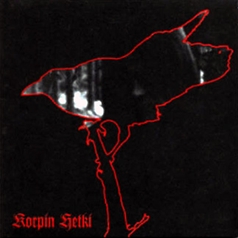
Horna - Korpin Hetki (2002)


Though a brief and somewhat rare offering, this is one of my favourite Horna releases. The material presented on Korpin Hetki dates back to 1999 and, despite the erroneous claims of many online sources, is not the first recording with new vocalist Corvus.  This is a case where one faulty report is made on the internet and various other sites use the original mistake as a basis for keeping such misinformation alive. This material predates Sudentaival and features the band's original vocalist, Nazgul von Armageddon. This E.P. includes only three songs, one of which is a cover tune and another that can be found on their previous full-length, yet the recording is still just as vital as any other from this period. 

Musically, this of course belongs to the band's early period. The music owes a lot to the early Norwegian bands, yet Shatraug's style had begun to develop a bit and to become more his own, by this point. The first track, "Ikuisuuden Pimeyden Varjoihin", relies on brilliant tremolo melodies that interchange with more old school riffing, displaying a very accomplished mixture of First and Second Wave sounds. There is a gloomy atmosphere that is easily conveyed by the guitar riffs, with the rest simply serving its purpose as an unassuming background that in no way distracts from the primary focus. The melody is very haunting and possesses kind of a horror vibe. "Condemned to Hell" is a cover of an old Impaled Nazarene track and, though not done poorly, does not quiet hold up to the other two songs. It is impressive that Horna manages to sound more necro and under-produced than the 1992 original; then again, Tol Cormpt Norz Norz Norz... had a rather good sound for its time. The other original track is "Synkän Muiston Äärellä", which displays a similar type of raw and grim Black Metal. The thrashier parts seem a little more pronounced, at times, giving this a decidedly '80s feel. Some riffs seem to hearken to the early days of Emperor, as well, betraying another of the band's Norwegian influences. It certainly kills the over-produced version that is found on Sudentaival. Too bad they didn't release more necro versions of some of the other tracks from that record.

It must be stated that the production found on this E.P. truly suits the material much moreso than the imitation Abyss Studio sound on the aforementioned full-length. The true weakness of that album was not so much the material but the slick and overdone sound that ruined any attempts at atmosphere. By hearing one of the tracks in an earlier and more natural version, one can really begin to see past the mistakes and realize that the material was not so bad. Korpin Hetki features the kind of necro sound that rivals that of Wrath of the Tyrant or Under A Funeral Moon, at times. The percussion is not as overbearing and, as a result, the riffs are actually able to breathe and to maintain the listener's full attention. The raw and fuzzy sound serves greatly to accentuate the musty, old school songwriting and to take you back in time a decade or more (from the release date of the E.P.).

In the end, this is an absolutely essential release for any Horna fan and it fully deserves as close of a listen as any of their other records. As the band was in a period of transition, this E.P. helped not only to keep the name out there and to clear off material with their past vocalist, but also to present fans with more filthy Black Metal in a way that few others were able to deliver at the time. Korpin Hetki may be somewhat overlooked, but it should not be. Seek these songs out in whatever way that you must.


Marduk - Panzer Division Marduk (1999)


Marduk's sixth full-length album, Panzer Division Marduk, was recorded in Abyss Studio and released by Osmose in March 1999. With this album, the band attempted a shift in direction, in more ways than one, while also creating something that would serve as the epitome of what many would deem to be pointless noise with no atmosphere, masquerading in the guise of Black Metal.

Musically, it would appear that Morgan decided to improve upon the mistakes of the previous two albums, in a sense. While the constant blastbeats and generic riffs were already a problem on Heaven Shall Burn and Nightwing, the other tracks suffered even more. The thing was that the faster songs seemed to be stronger and more enjoyable, at least in the sense that they passed more quickly and got right to the point. On the other hand, the songs that featured more variation in tempo often meandered around with no direction and were incredibly boring. While not really solving the problem of weak songwriting, the band took the opportunity on Panzer Division Marduk to accentuate their strengths and to better hide their prime weaknesses. The end result is an album that is, as hard as it is to admit, more tolerable than its predecessor. That is not to imply that the record is not boring and largely worthless, for it is, with countless guitar melodies that hint at something better and then disappear back into the false chaos. Of course, Legion continues doing what he does best: making a complete nuisance of himself, trying to fit too many lyrics into every line and ruining the songs even more. 

The production is a total joke, just as with most albums that were being raped by Peter Tägtgren, around this time. While one can put a lot of the blame on his shoulders for creating such a sterile and lifeless sound, no one forced Marduk to seek out his services. With two awful records having already been defiled in his unholy studio, the band knew what to expect and actively sought more. Ultimately, they are to blame for the slick, modern sound of drums overpowering guitar riffs and the terrible clicky bass sound interfering with already-weak guitar riffs. If nothing else, they could have buried the vocals in the mix, so as to condemn Legion's wretched performance in obscurity, where it belongs.

Panzer Division Marduk is the total opposite of what Black Metal should be. There is not one shred of dark atmosphere to be found, while the Death Metal mentality of trying to be brutal and sound heavy is quite dominant. It is sad to think that a lot of people got the impression that this is indicative of the typical Black Metal sound and went on to copy it, as they only perpetuated the lie. That being said, the band at least won a personal victory, as they managed to make a more concise and less irritating album than they had, the previous year. Avoid this and stick to the classics. 

Marduk - Nightwing (1998)


Released in April 1998, Nightwing was the last album from Marduk that I was able to enjoy, until recent years. Like its predecessor, it was recorded in Tägtgren's Abyss Studio. This L.P. features a lot of the flaws that would be more greatly emphasized the following year, while still possessing enough of the band's original qualities to make it worth listening to. It also seems to be the final album to have more of a campy atmosphere, rather than the darker themes that would be explored later on.

The music is not the best that they had ever written, yet the production actually makes it seem worse than it is. The slick and modern Abyss sound is one of the worst things to happen to Black Metal in the mid-to-late '90s. Bands like Marduk, Dark Funeral and Immortal flocked to this rotten studio and got a sterile production job for their efforts. While the truly worthwhile compositions managed to rise above this, in some regard, even the best songs were partially crippled by the terrible sound. It would appear that Marduk had always suffered from lousy producers and sub-par mixing. Evil's songwriting deserved much better, certainly. On Nightwing, the pummeling drums take over and the guitar melodies are much harder to distinguish. It is almost as if Tägtgren tried to smother the very best riffs, rendering the finished product almost lifeless. 

Whether mostly due to the production or just lazy songwriting, Marduk's fifth full-length suffers from a real lack of memorable riffs and songs, in general. The first few songs, "Bloodtide", "Of Hell's Fire" and "Slay the Nazarene" seem to run together, with a lot of the pointless blast beats and meaningless guitar riffs that would define the band's middle period (though the first track offers more variety and more thoughtful arrangement, about halfway in). The most memorable song on the album is probably the title track, yet this is largely due to the fact that they ripped off the Subspecies theme and built the song around that. While it was very awesome to hear this being used by a Black Metal band, it still says a lot for the lack of creativity in that the best melody on the whole record was borrowed from something else. Furthermore, the subsequent riffs do nothing to build on the atmosphere created by this main theme. In fact, they almost seem to contradict the dark feeling that the song begins with. Songs like "Dreams of Blood and Iron", once again, demonstrate what a terrible vocalist Legion was, as he could never shut up long enough for the riffs to take full effect. This is a problem with a lot of bands; trying to fit in more lyrics than are necessary and drawing too much attention to the vocalist, rather than doing what is best for the song and the atmosphere that it is trying to convey. This song is also notable for ripping off a Bathory song title and using a lead solo that is very similar to something Quorthon would have done.

Nightwing is a rather boring and uninspired album, especially when compared to Marduk's earlier output. It has its moments, with decent riffs and ideas scattered throughout the record, but can be considered only lackluster at best. It says a lot that the best song on the album is a re-recorded version of a track from Opus Nocturne and that the most memorable riff was taken from a low-budget horror film. While this isn't horrible, you are better off sticking with the first few albums.