Friday, September 12, 2008

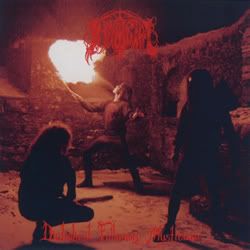
Immortal - Diabolical Fullmoon Mysticism (1992)

Photobucket

Diabolical Fullmoon Mysticism is the first full-length from Norwegian Black Metal band Immortal. The album was recorded in Grieghallen Studios, around the same time as Det Som Engang Var, and produced by Pytten. The sound is very similar to that of early Burzum, due to similar production. There is a strong Bathory influence here, particularly from Blood Fire Death. This is evident from the opening moments of the album. As with so many great bands, my first exposure to Immortal came from "The Haunted Mansion". One Winter night, I heard the song "The Sun No Longer Rises", from Pure Holocaust and I wasted little time in acquiring that album. Some time later, while in Oslo, I picked up their debut L.P. and it wasn't long before I had a new favorite Immortal album. It was a close call, but songs like "Cryptic Winterstorms" left no doubt as to which album I preferred and it accompanied me on many late night drives through desolate areas. Often, I seemed to have the roads all to myself and had this album blasting as the cold winds blew in through the open window, blowing through my hair and freezing my fingers. Peaceful times... Abbath Doom Occulta, Demonaz Doom Occulta and Armagedda came together to create a very memorable album of grim Black Metal. While the following album usually tends to get the most praise, I feel that this one is an undeniable classic and should not be overlooked.

The album opens with a short intro that is very reminiscent of Bathory, especially with the sound of the winds and the acoustic guitar. Already, you can feel the icy hands of Winter taking hold.

"The Call of the Wintermoon" unleashes the fury from the north, as the fast tremolo riffs and blasting drums rage forth like an arctic storm. The riff is simple yet very effective. In no time, the tempo changes and Armagedda employs a very oldschool drumbeat, typical of 80s bands like Venom and Mercyful Fate. Abbath's screams are noticeably different than the severely grim croaking sound that he would utilize on the next album. I actually prefer this style as it seems more natural. There is a coldness created here as well as a sense of doom. The solo is very well done and I wish more Black Metal bands found ways to fit decent solos into their music. The song evokes imagery of being summoned by the full moon for battle in the cold Winter night.

"Unholy Forces of Evil" is next and begins with an oldschool style as well as Abbath's possessed vocals. Demonaz's guitar riffs have an sense of something ancient and produce images of old, forgotten tombs and battlefields littered with corpses long dead. The song features some very 80s-based riffs, throughout most of the song, but also some faster parts with the typical tremolo riffing of Norwegian Black Metal.

"Cryptic Winterstorms" begins with a cold, mournful acoustic guitar as the song begins. The song is mid-paced and carries an epic feeling. The acoustic guitar appears again, throughout the song, and the main melody is very mournful. This song is reminiscent of Bathory and Burzum, without sounding too close to either one. This is, absolutely, my favorite Immortal song ever and is included on a mix tape I made for my car, somewhere between Darkthrone's "Paragon Belial" and Burzum's "Black Spell of Destruction". The solos are perfectly done and Abbath's vocals add a lot to the atmosphere. His screams could be described as very wild and animalistic as compared to later albums.

Following this epic masterpiece is "Cold Winds of Funeral Dust". This song begins slowly and includes some thundering drums. This is pure oldschool Black Metal, and could have easily been released in 1989 or so. The pace is similar to something you would find on Blood Fire Death, yet there are enough harmonies layered on top of that that give it a distinct Norwegian sound. Abbath's vocals are evil as Hell, here. Near the end, the song speeds up to a furious pace, somewhat similar to something found on Gorgoroth's debut album, before fading out.

"Blacker Than Darkness" continues the album and starts with a mid-paced riff. In a short time, the song speeds up to a thrashy pace that would not be out of place on The Return... The riffs are very memorable, as every song in here possesses an identity of its own. There is no filler here.

The album ends with "A Perfect Vision of the Rising Northland". This epic song begins with a somber accoustic piece that leads into a very evil tremolo melody as the drums slowly build up and the song takes off at a pace quite like that of the title track from Blood Fire Death. An intense spoken word part precedes Abbath's vocals, slowly appearing like some ghoul rising from a forbidden crypt. While Pure Holocaust is like a journey through the frozen lands of the North, Diabolical Fullmoon Mysticism seems to explore only the immediate area surrounding some lost Medieval castle, inhabited by spirits of pure evil, as they roam the surrounding forests and mountains, never straying too far. There is a sense of dread and melancholy in this song as it takes the listener on a long and dark journey. Late in the song, there is a slight bit of keyboard use, accompanying a spoken word part. It is done very well and only serves to add to the atmosphere as Abbath then screams:

"This Winter is forever!"

Indeed, that would be glorious... As the song continues, evil and yet sorrowful melodies inspire visions of another world where the sun freezes to dust. The same acoustic melody that began the song then returns to end the album. In a way, the title is very appropriate, as one gets the impression that only a brief vision was allowed and yet there is so much more. If only the barrier can be crossed...

Thursday, September 11, 2008

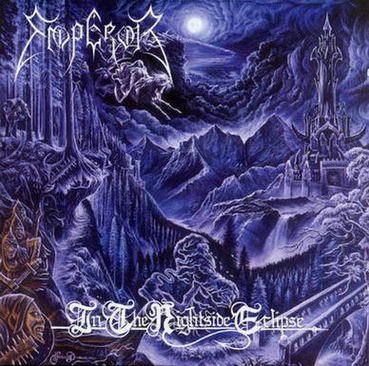
Emperor - In the Nightside Eclipse (1994)

Photobucket

In the Nightside Eclipse is the definitive Emperor album. It lacks the poor production that plagued Wrath of the Tyrant, while still possessing some of the necro element. This was recorded in Grieghallen during the seventh full moon of 1993. It was produced by Pytten, known for his work with Mayhem, Burzum and Immortal. The cover featured artwork from Necrolord, who did the covers for the first two Dissection albums, among countless others.

After a brief intro, "Into the Infinity of Thoughts" explodes with icy cold riffs that seem to take some influence from Mayhem. In fact, the album is dedicated to Euronymous. The fast tremolo riffs, blasting drums and unrestrained vocals strive to create a soundscape of darkness and evil. The one main drawback is that the keyboards are too loud in the mix, and tend to drown everything else out, to a degree. Also, I think that a lot of the atmosphere created through using keyboards could have been done with the guitars. Actually, that touches on another point: the album would lack a lot of its atmosphere without the synth, which is not good. The synth should add to the atmosphere rather than provide the majority of it. Musically, underneath the synth, a lot of the riffs and drumming reminds me of Immortal's Diabolical Fullmoon Mysticism. At any rate, the first song does possess icy riffs and an epic feel. The quiet parts, with the dark guitar melodies and the sound of freezing winds drag the listener into the world depicted on the cover.

"Cosmic Keys To My Creations and Times" begins with a masterful tremolo riff that should have lasted a bit longer. As the blastbeats increase in speed and the keyboards become more dominant, this riff is lost. Actually, everything underneath the synth seems lost for a while, with the exception of the hateful vocals. Once the song slows down again, and the synth allows the guitars to breathe once more, it is easier to be drawn into the darkness being created. However, I can't help but wonder how this would sound if the guitars were much higher in the mix. The tempo slows down, near the end of the song, and this is one of the more memorable moments, as the guitar riff carries it along.

Next is "Beyond the Great Vast Forest". In various places on the album, one will find sections that seem to regress back to the more necro times of Wrath of the Tyrant, creating mental imagery of blackened dungeons. An appropriate sentiment, since much of the music from that demo was rearranged and used here. It is almost difficult to notice as the overpowering synth takes command, early on. The extra lead harmonies added to the slower section really help the atmosphere. During its best moments, this L.P. is like the cold air of winter, blowing down from the snow-capped mountaintops, awaiting the end of the world. The band manages to create an epic, somewhat apocalyptic feeling, at times.

"Towards the Pantheon" follows and begins very quietly, creating an eerie and uneasy feeling. Ihsahn opens with a very lengthy, almost inhuman and breathless, scream that stretches on forever. There is an intense hatred, accompanied by a melancholy for the truth of this life, and a deep sense of longing for a different world... a realm of fantasy. Beneath the layers of synth is a song of pure Black Metal. As with the last song, this one takes the listener deeper and deeper into the darkness and creates a sense of urgency and panic.

Throughout In the Nightside Eclipse, the music itself is arranged in a cyclic style as riffs flow into riffs, then return to their original pattern at times; a kind of theme is established in each song that is repeated, while the songwriting will often move into other more complex patterns, melodies and structures. "The Majesty of the Nightsky" begins with fury and speed, yet a almost calming melody pervades and changes the mood. Emperor infuse a more Wagnerian aspect into their music, a sweeping narrative that is no true attempt at narrative, and lyrics and vocals simply amplify this. Lyrics are filled with a dark mysticism of death, evil and nature, a reveration of the true dark powers of the Earth. As the instruments stop, nothing is left but the synth melody and the sound of cold winds. A thunderous sound accompanies the return of the drums and the sorrowful guitar riffs join with a spoken words piece that imbues the listener with a sense of calm and relief. As if the blood is flowing freely from your veins as you gaze up into the darkness, soon to be liberated from this world. As the song speeds back up, it carried your spirit into the nothingness that surrounds.

"I Am the Black Wizards" begins with a brilliant tremolo riff, that is followed by something slower, reminiscent of Burzum, but only briefly. As the song gets going, the main theme returns and this is probably one of the best melodies on the album. The atmosphere gets even darker as the pace slows down. One gets images of dark towers where beings beyond feeble concepts of good and evil live in a manner that seems vile to any who possess normal "good" values, but a way that in of itself is not evil, simply a way of life. Late in the song, a new riff is introduced that is pure evil. It carries with it doom and the promise of agony. Hellish screams are followed by a serene, if not mournful, melody that finishes out the song.

"Inno A Satana" closes the album by introducing clean vocals, for the only time on this album. They are accompanied by wretched screams and some cold and lifeless riffs, hearkening back to early Burzum. As the riffs build up, the song ends with Ihsahn whispering:

"Inno a Satana."

In the Nightside Eclipse is definitely complex and it requires a decent attention span. This isn't something that can be absorbed by simply turning the CD on and continuing to do other things. This requires the focus of the listener. The music creates an atmosphere of reverence for the dark beauty of the night and the sinister shadows of the deep forests. Emperor manages to find solace in those things that humans dread the most. Ihsahn's demonic shrieks spread hatred as the riffs carry you higher and higher, toward the glowing moon high above, before suddenly letting you fall to the frozen earth below.

Emperor - Wrath of the Tyrant (1992)

Photobucket

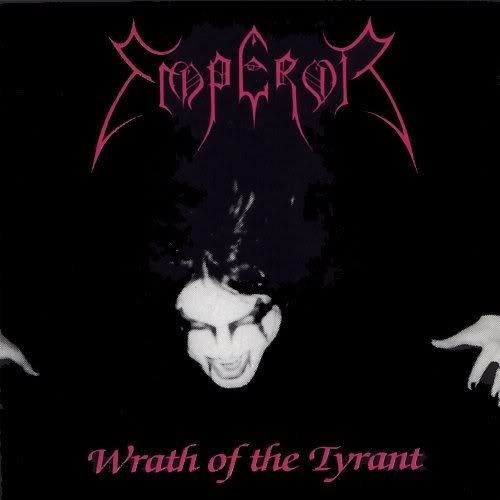
I discovered Emperor, back in high school, hearing the song "Thus Spake the Nightspirit" on a college radio show called "The Haunted Mansion". This was not long after Anthems... was released. That would go on to be the first Emperor album I came across. It would be a year or so later before I discovered the earlier works; however, once I did I found myself much more drawn to them.

In 1991, Samoth and Ihsahn left Death Metal band Thou Shalt Suffer. They were joined by Mortiis. Probably being heavily inspired by bands such as Mayhem and Darkthrone, they abandoned their previous style to play primitive Black Metal In May 1992, they recorded Wrath of the Tyrant on a 4-track home studio. The sound quality is very necro, albeit needing some improvement. The songwriting shows a lot of promise and, in my opinion, Emperor would have done well to pursue this style rather than choosing to "progress" with each release.

The album begins with a short, creepy keyboard intro created by Samoth, leading into the first song, "Ancient Queen". The first thing that one notices is that the instruments seem to be down-tuned. Seeing as how Emperor jumped on the Black Metal bandwagon in a hurry, they may have forgotten to stop using the tuning from their Death Metal days. The sound is very harsh and crude, yet it has a deep low end in contrast with so many other Black Metal releases; Ihsahn's guitar and Mortiis's bass (both rather heavily distorted) have enough power to let the melodies break through the wall of static and invade the listener's ears without losing too much power. The drums are the lowest instrument in the mix, while Ihsahn's vocals are very loud and possess a lot of reverb. This song is decent enough, but nothing incredibly special.

"My Empire's Doom" is next, and is much more complex and layered; Samoth does a really nice job on drums, and Ihsahn's vocals follow the rhythm over the opening riff. This song would later find its way onto In the Nightside Eclipse, transforming into "Beyond the Great Vast Forest". Oddly, this version closes with a rather abrupt fade out, which makes one wonder if the closing riff that appears on the later version was added on or already existed at this stage but was cut off for some reason.

"Forgotten Centuries" begins with some indecipherable vocals and a fast tremolo-picked riff, before utilizing something more fitting of a Celtic Frost album. This is a short and complex song; featuring some of the most interesting riffs on the album. It's too bad that the sound quality isn't a little better. There is a nice, cold riff that would sound much better with more focus placed on the guitars and less low end.

"Night of the Graveless Souls" is another fast, straightforward Black Metal song. Again, there are some decent riffs that never seem to get enough room to breathe, due to the muffled sound and the down-tuning. It's not that I would prefer the over-produced sound of later Emperor albums, rather there needs to be more focus on the guitars. Transilvanian Hunger was recorded with similar equipment and yet it sounds far better. Also, I think there is a little too much reverb on the vocals. It only serves to drown out the rest of the music.

"Moon Over Kara-Shehr" has several killer riffs and equally numerous tonality and rhythm changes, though it features some Death Metal riffs that do not belong here as well as a continuation of the reverb overkill. As the album, or demo as it should be called, progresses it becomes more apparent that Emperor had not yet fully grasped what Black Metal was all about.

"Witches' Sabbath" is probably the best song on here. It begins with a mid-paced, oldschool riff and then Ihsahn's screaming actually helps the atmosphere, as well as the doom-filled riffs that follow. The haunting moans only add to this. Then, the song speeds up and one gets the impression that with clearer guitars (or the actual ability to have recorded a second guitar track) this would be a hell of a song.

Next is "Lord of the Storms". This is another short song, featuring only a couple of riffs. There is nothing really special about the song and it is, more or less, filler.

"Wrath of the Tyrant" begins with a horrific scream and decent primitive Black Metal riffs. After plodding along for a bit, there is a very promising riff that is gone all too soon. At this point, the drums seem to be the most dominant thing and little else can be heard. The song ends with an eerie spoken words part.

All in all, this demo shows quite a bit of promise, but it also displays the fact that Emperor had yet to shed their Death Metal tendencies, entirely. There are a handful of riffs that have no place on such a release, as well as several others that should have been expanded upon. This is raw and primitive and, despite its flaws, still more enjoyable to listen to then the last few albums they released.

Tuesday, September 9, 2008

Mayhem - De Mysteriis Dom Sathanas (1994)

Photobucket

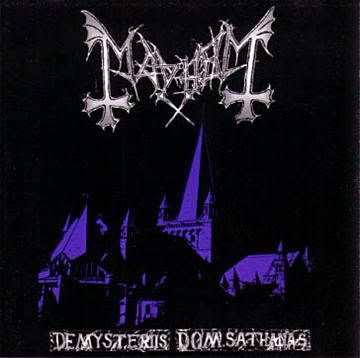
Mayhem's first full-length, De Mysteriis Dom Sathanas, was one of the first Norwegian Black Metal albums that I picked up. I got this around the same time that I was acquiring my first albums from Darkthrone and Burzum. Some people seem to have a hard time digesting this album, but I was drawn to it, instantly. I didn't hear any of the material with Dead until a couple months later, so I had nothing else to compare it to; thus, I wasn't disappointed. Thanks to my best friend, I'd heard one song from this album already, and the melodies haunted my mind to the point where I had to get this album as soon as I could. One cold October night, my search was over and I retreated to the shadows to listen to this, in its entirety, by the light of black candles. I knew I was about to experience something amazingly dark and I wanted no distractions. The following night, I attempted to share this dark magic with a girl that I knew. She was so creeped out that she asked me to turn it off. Suffice it to say, she wasn't welcome in my home after that. But I didn't need her. I didn't need anyone. During a time of solitude, I had all that I really needed: music.

De Mysteriis Dom Sathanas shall forever stand as a seminal piece of Black Metal history. For six years, Euronymous laboured over this album. Riffs were worked on and then thrown away because they weren't dark and evil enough. The lineup changed, considerably, from Deathcrush. In 1988, Dead and Hellhammer joined the fold. After recording some rehearsal tracks and playing legendary gigs across Europe, in very obscure places, the band suffered setback after setback. Euronymous opened a shop, called Helvete, and was seen as somewhat of a mentor to the Norwegian Black Metal scene. Mayhem was the first Black Metal band in Norway, and they had the respect of the younger bands. However, the shop wasn't doing so well. His record label, Deathlike Silence Productions, released albums from Abruptum, Merciless and Burzum. He even re-released the Mayhem E.P., yet the label wasn't fairing much better than the shop. Dead, who had contributed so much, regarding the whole direction of the band, from lyrics to aesthetics, killed himself in April 1991. Shortly thereafter, Necrobutcher left the band. Euronymous was forced to sit in the background as the younger bands, such as Darkthrone, Burzum, Immortal and Emperor all released albums. As the others took the underground by storm, the members of Mayhem were living in poverty, too poor to even record their debut L.P.

Finally, in the summer of 1993, Mayhem entered Grieghallen Studios to record their masterpiece. Euronymous and Hellhammer were joined by Attila Csihar, from Hungarian Black Metal band Tormentor, and Varg Vikernes, of Burzum. Additional guitars were handled by Blackthorn. The Prince of Death had assembled quite a cast for this album. Sadly, for reasons only known to Varg, himself, Euronymous would not live to see his creation released. That would come only after his brutal demise. After the media blizzard died down and all of the hype faded away, nothing was left but the music. The music is what's important.

"Funeral Fog" bursts forth like the bitter cold winds of a Winter storm, with blasting drums, fast tremolo riffs and a haunting lead harmony, weaving throughout the controlled chaos. Attila's vocals can only be described as horrifyingly grim. The music is utterly dark and one can easily see that Euronymous took advantage of all the time he had to perfect every note.

"Freezing Moon" is next, and the title could not be more appropriate as this begins with one of the coldest riffs ever. As with the rest of the lyrics, these were written by Dead. They are all very morbid and possess an obsessive quality. They imbue the listener with darkness and fear, conveying the fragility of life and the ease with which it can end so quickly. The simplicity of the lyrics masks very dark and troubled depths and a yearning for peace which, unfortunately for Dead, only his demise could bring. As the song slows down, the atmosphere is that of doom and an inhuman bloodlust. Varg's bass lines can be heard clearly, at this point, as well. There is an eerie solo that suits the song, perfectly. Attila's tormented and possessed vocals and Dead's morbid lyrics make for a good match. The song speeds up once more, with the freezing riffs carrying it to its end.

The next song begins with more of the same cold and dark riffing, as the drums take a moment to build up. "Cursed In Eternity" was actually the first Mayhem song I ever heard, and I remember being drawn in by the haunting melodies, though the very grim vocals, droning on in an inhuman way, took another listen to fully grasp. Everything comes together to create an atmosphere of mortal terror. The riffs are so important to this album, yet Attila's dramatic vocal approach also aids greatly.

"Pagan Fears" starts out with a, somewhat, unorthodox rhythm. It sounds more like something from Deathcrush, yet this doesn't last very long. The song speeds up and Dead's dark tale unfolds. This album is a good example of what Black Metal is supposed to be. Guitars, first and foremost.

"Staring obsessed at the moon..."

"Life Eternal bursts forth with fury before quickly settling down into a mid-paced tempo. The riffs here seem to be very similar to what one would find on an old Burzum album, and I often wonder if he was either influenced by this song, or if he had some sort of influence on the song. This is the longest song on the album, and possesses a very dark and mournful feeling. Near the end, there is a moment where there is nothing but a freezing tremolo guitar riff that is cutting through your flesh... This riff is brilliant and this is one of the best moments on the whole album. The riff is then accompanied by blasting drums and insane vocals. Some of Dead's most poignant lines follow:

"What will be left of me when I am dead? There was nothing when I lived."

"From the Dark Past" follows and features somewhat of a Thrash riff, as the song builds up. This is cast aside in favor of typical tremolo riffing after a brief time. More grim moans and screams from Attila carry the listener into a nightmare from which there is no escape. The most atmospheric part of the song comes as most everything else stops and leaves the guitar all alone. Unfortunately, Hellhammer keeps interrupting with unecessary drum fills. He should have taken his cues from Fenriz and understood that less is more. It doesn't ruin the song, but it does work against the feeling that was being created with the melody.

As the album approaches the end, "Buried By Time and Dust" speeds through with great intensity. This song is very straightforward and features some of the best riffs on the whole album. The lead harmony is absolutely brilliant and the song works well in this sped-up version, as opposed to the way it had been played on the live recordings.

"De Mysteriis Dom Sathanas" begins with the single best riff on here. The gates of Hell have been opened and demons now flood the earth. This song is an epic of pure evil and an excellent way to end the album. The riffs are cold as the winds coming off a glacier, and the lyrics tell of a sacrificial ritual in the dead of night. Attila's vocals are at their most theatric, here, and they work very well.

There has always been much debate, regarding the vocals. Personally, I've always felt that it was a shame that Dead was unable to record the vocals for this album as I really liked what he did on the studio tracks, "The Freezing Moon" and "Carnage". However, it was impossible for him to do the vocals for this album and I think Attila was a fine choice. His voice is unique and he truly seemed to put forth a lot of effort to channel the darkness intended for these songs. In truth, he sounds fucking possessed, and that suits the music, as well as the lyrics. Besides that, I read in an old interview that Dead was a fan of Tormentor, so it would seem all the more appropriate. All in all, this is a very solid album. Is it the best Black Metal album ever recorded? Probably not. However, it is every bit the classic that it is hailed as and one of the most important Black Metal records ever made. No one can deny the importance of Mayhem for the Norwegian scene, and beyond. It's a pity that the band name was resurrected after the two most important members were long gone.

Gorgoroth - Pentagram (1994)

Photobucket

Pentagram is a classic album of True Norwegian Black Metal. On this album, Gorgoroth did everything right. Nothing is out of place. Every riff, every arrangement... every single note is exactly as it should be. This should be regarded as nothing less than a masterpiece. The only negatives that anyone might be able to dig up is that it bears similarities to bands such as Mayhem, Burzum and Darkthrone. The rhythm section, in particular, brings to mind some of the faster material from the early Burzum albums; however, this seems to be executed in a style similar to what Mayhem did on De Mysteriis Dom Sathanas. The drums are kept simple enough (taking a cue from Darkthrone) and add the occasional fill when needed. At times, the intensity of built up to introduce a new riff, but they march forward, steadily, for the most part. The heavy echo gives them a thunderous feel, reminiscent of Burzum. The rhythm guitar adheres to a similar pattern, filling in the low frequencies and providing the melodic foundation for the harmonies of the lead guitar. Despite these influences being obvious (aren't Darkthrone's influences quite apparent as well?), Infernus displays a great talent for songwriting and has created some truly amazing riffs. However, stunning riffs don't necessarily equal a classic album. That's where the arrangements come in. Everything is played at precisely the right moment, sending chills down your spine, at times. Pentagram shows a great sense of climactic narration that takes you to the heights of the mountaintops and back into the swirling abyss, damned to suffer eternally. For every bit of vicious energy that comes through, there is also an atmosphere of sorrow. All the instruments work together to create compositions of breathtaking artistry. The vocals are no exception.

Hat's extremely high-pitched vocals are absolutely insane. To my knowledge, there was nothing else quite like this at the time, and no one has ever come close since. Apparently, there are some that do not appreciate his vocal approach and I can't fathom why, as it suits the music without question. His voice seems to take the role of a rhythmic instrument, rather than as a 'lead singer'. This is an intense album, to be sure, but the percussive vocals give it the final touch it needed to go beyond perfection. Despite showing some influences, this album is quite unique and added yet another element to the developing Norwegian Black Metal scene.

The album opens with "Begravelsesnatt", which translates to "Burialnight". This song is very short, and goes for the throat immediately. The fast tremolo-picked melodies cut through you as the high-pitched screams penetrate your skull. The style seems similar to Darkthrone, yet the execution is closer to Mayhem. The pace slows down just a little bit, right near the end.

Next is "Crushing the Scepter (Regaining A Lost Dominion), which is a bit slower and features some slower, doom-filled sections, and the open-arpeggio riffing that Burzum is known for. After plodding along, the song speeds up once more and unleashes a freezing cold lead harmony. As the song slows down once more, a sorrowful melody carries it to its conclusion. This is true brilliance.

"Ritual" begins with fast guitars, a somber melody and blasting drums, but quickly turns into a mid-paced dirge, complete with tormented screams from beyond. After swimming through lakes of fire, the song speeds up and slows down, carrying you to the peak and then letting you fall to the jagged rocks below.

"Drømmer Om Død" is next and starts with a more simplistic pace. Beautiful lead harmonies, weave in and out, until the song builds up into a complete monster, crushing everything in its path. The thunderous drums, menacing guitars and hellish vocals unleash their fury before fading away, leaving only an echo.

"Katharinas Bortgang" begins with the same intensity as the title track from Burzum's Hvis Lyset Tar Oss. Rather than droning or using repetition to lull the listener into a trance, the song builds, steadily, higher and higher in an effort to unleash war upon the pearly gates. The melodies are nothing short of pure genius.

"Huldrelokk" is an instrumental track that features a good number of excellent riffs. The speed is fast yet the harmonies create a dark atmosphere, as is present on the rest of the album. How a two minute instrumental piece can possibly be so epic, I'll never quite understand. Credit must, again, be given to the sheer brilliance of Infernus.

"(Under) The Pagan Megalith" keeps up the pace from the previous song, carried along by Hat's inhuman screaming. The song features a surprising thrash riff, then slows down into something reminiscent of Under A Funeral Moon, complete with bells, before speeding up once more. I once heard someone say that Gorgoroth was a generic Black Metal band. Honestly, I have to wonder if they've even heard this because this is anything but generic.

And, finally, we come to "Måneskyggens Slave". This is the climax of the entire album, and one of the most epic Black Metal compositions ever made. Everything is here; the fast tremolo riffs, the slower arpeggio riffs, the blasting drums, the terrible shrieks, the freezing melodies... More important is the way that everything is arranged. The break, where everything stops except the guitar is one of my favorite moments on the whole album. Like any great, epic song, this takes you on a journey. However, even describing every single note would never come close to explaining the importance of this song. The melodies are dark and sorrowful, yet the song is filled with energy. There is a definite 'Metal' vibe (for lack of a better term) that seems to urge you on, as if into battle. You know that your enemy possesses greater numbers and that you will not defeat them, yet you will meet them in battle, nonetheless.

Twenty-nine minutes. Just under half an hour, yet this possesses the epic nature of an album twice as long, at least. Sometimes forgotten, Pentagram is evidence that Gorgoroth were equal to and, sometimes, superior to their peers in Norway and beyond. 1994 saw the release of De Mysteriis Dom Sathanas, Transilvanian Hunger, Hvis Lyset Tar Oss and even In the Nightside Eclipse, yet none of these highly regarded albums can overshadow the brilliance put forth here. Gorgoroth may have arrived a little late, but they were in no way inferior to the rest. If you don't own this, seek it out at any and all cost.

Darkthrone - Panzerfaust (1995)

Photobucket

After becoming completely obsessed with the Transilvanian Hunger cassette that I obtained, I managed to wear it out to the point where it didn't play as well. Mind you, this was no cheap copy but rather the actual cassette. As a result, I began looking for the CD version. It took a couple months to find but, in the meantime, I stumbled across Panzerfaust, making it the first official Darkthrone album that I owned on CD.

Panzerfaust was recorded in Necrohell Studio, in the early months of 1994, and was the final of the classic Darkthrone albums. While not belonging to the 'Unholy Trinity', it is certainly still part of that era. This was the first album that they released on Moonfog Records, having severed ties with Peaceville after the previous recording. The cover features Nocturno Culto in a snowy forest, with the moon in the night sky above. On the back reads the words: "Evig er Krigen Mot de av lyset." This translates to, "Eternal is the war against those of the light." The production is still very lo-fi and ugly, but the sound is a bit different from its predecessor, most likely due to the variation in tempo and the prominence of the vocals.

The album begins much as one would expect it to, as "En Vind Av Sorg" would not be out of place on Transilvanian Hunger. It would seem that the band found their distinct style on that masterpiece and this would be a continuation of that brilliance. The tremolo-picked melodies are freezing cold and the drums blast away in obscurity. Yet the first thing one notices is that the vocals are much higher in the mix than before. Perhaps, they are a little too high, but this is a minor complaint. In a sense, this serves to make the song that much more harsh and unwelcoming. The mournful harmonies create an atmosphere of sorrow (appropriate, since the title translates to "The Wind of Sorrow") yet the vocals are as hateful as they are anguished. The main riff is one of the best Black Metal riffs ever written. As the song ends, drums and vocals fade away, leaving only the sorrowful guitar melody.

The next song, "Triumphant Gleam", came as somewhat of a shock, being total Hellhammer/Celtic Frost worship instead of following along the expected path. This is very raw and primitive Black Metal, yet energetic and thrashy as well. The double bass came as a bit of a surprise. As the song slows down, the dark and evil atmosphere begins to surround you, but it isn't long before the song speeds back up.

"Hordes of Nebulah" is an absolute monster. Stylistically, this owes a lot to Celtic Frost. The riffs are slow and filled with doom. Nocturno Culto's vocals are dripping with hatred and sorrow. If Hellhammer was what happened when you slow down Venom, this must be what it's like to slow down Hellhammer/Celtic Frost. However, this is not mere imitation. The presentation of the song may not be that original, but it is easily identifiable as being Darkthrone. The guitar solo, albeit brief, is eerie and adds to the overall effect. This is the kind of song that makes you want to gouge out your own heart with a rusted blade or to turn the hatred outward and annihilate all traces of life from the earth.

"Hans Siste Vinter" is another song that possesses the Transilvanian Hunger vibe, consisting of fast tremolo riffs and blasting drums. The mournful melody is very haunting and will freeze you to the very core of your being, turning your blood into ice and leaving you to die in the cold wastelands, covered by the falling snow. Of note is that the lyrics to this song aren't included in the insert, making me wonder if this song was just written at the last minute to fill time. Either way, it's one of the best on here.

"Beholding the Throne of Might" is another mid-paced song that some would see as a tribute to Celtic Frost. On the surface, that would appear to be an accurate conclusion. However, the spirit of Darkthrone cannot be denied. This isn't simply Celtic Frost with harsher vocals. The atmosphere being created on this album is pure Darkthrone, regardless of the style they utilize to do so.

The next song's lyrics were penned by none other than Varg Vikernes and, strangely, the song is actually similar to something that one would expect from Burzum. "Quintessence" is the most epic song ever written by Darkthrone. The atmosphere is cold and filled with doom. Nocturno Culto's vocals are filled with such anguish and utter hatred. This is one of the most inspired vocal performances in the history of Black Metal. Near the end, it is absolutely bone chilling as his tormented voice screams:

"Only one single lamp do show me this way, and that is... the eye of Satan...SATAN!"

This is a very cathartic experience. The main riff continues on, before a few more desperate screams signal the end and it slowly fades out. A very powerful song, on many levels.

"Snø Og Granskog (Utferd)" sounds like something left over from Isengard, but does well to suit the atmosphere that has been created by the song preceding it. The outro features the voice of Fenriz (presumably) speaking in Norwegian.

Burzum - Filosofem (1996)

Photobucket

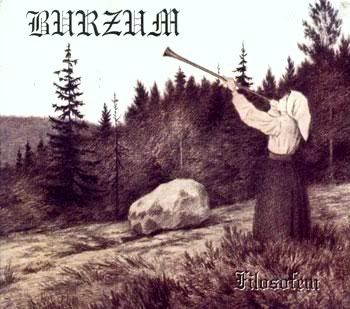
After discovering the brilliance of the song "Black Spell of Destruction", so many years ago, I searched to find any Burzum album that I could. Back then, it was very difficult and the search took longer than I had anticipated. In the meantime, I managed to record my first Burzum song from the college radio show, "The Haunted Mansion", that I regularly listened to. This song was titled "Burzum".

[Contrary to popular belief, this is the official title of the song, not "Dunkelheit" as many seem to think. I have no idea why the German translations were listed on the back, but this is obviously a mistake. There is not a single word of German spoken on this album, as the actual lyrics are in English and Norwegian.]

The word "Burzum" means "darkness" in the black speech of Mordor, a language created by J.R.R. Tolkien. This was the first song Varg ever composed and wrote lyrics for. Upon writing this song in the summer of 1991, he changed the name of the band from Uruk-Hai to Burzum. This song was initially intended to be included on an earlier album, but the recording was considered to be poor.

Filosofem was recorded in March 1993, in Breidablik Studio. The sound is more harsh and raw, especially the vocals. It has been said that Varg chose to use the worst possible mic for the recording, and it shows. I think this is the one major setback of this album, when compared to the others. For one reason or another, this seems to be the most popular and accepted Burzum album, yet I feel that the loss of such unique and powerful vocals is a detriment to the music. This was the last Black Metal album recorded by Burzum.

"Burzum" begins with Varg's trademark, sweeping guitar riffs and sparse drums. The sound is cold as ice and the song is mid-paced throughout. There are keyboards that are used sparingly, perfectly blending with the music. The vocals are heavily distorted and raspy, yet more decipherable than the earlier albums. The effect is more grim, but it loses something with regard to the emotion that was conveyed with the previous style. Very inhuman, to say the least. However, later in the song, he uses clean vocals for a spoken word part. The mood is very dismal and hopeless as the music plods along and the arpeggio riffs repeat, again and again. It seems almost trance-inducing.

"Jesu Død" begins with fast tremolo-picked riffs but no drums. This continues to build up the suspense for a minute or so, as you know what is coming and become a little impatient. Absolutely brilliant harmonies used here. The raw production suits this song very well. The screeching vocals seem to take a place in the background, along with the drums, as this song is largely driven by the guitars. They are very distorted and abrasive, yet they require close attention in order to hear the different layers of melody. The fury unleashed by this song is truly unrelenting and Varg displays a great deal of stamina.

"Beholding the Daughters of the Firmament" is next, and the pace slows down from the previous song. This is very primitive and simplistic, yet creates a cold and sorrowful atmosphere. Again, I feel that the different vocal approach really holds this album back from achieving its true potential. As this song draws to a conclusion, the general consensus is that the album begins to lose something in consistency. I reject this view, but it may depend on what you are looking for when you listen to this album.

The next track is an atmospheric piece that abandons conventional song structures. "Decreptitude I" is very melancholic and imbues one with the sense of drowning in blood. Indeed, Varg sounds as if he is dying. As good as this is, I must wonder what it would sound like with his trademark screams. Either way, though most consider the album over after track three, I feel that this song is very essential to the overall atmosphere of the album.

"Rundtgåing av den Transcendentale Egenhetens Støtte" is a 25 minute long ambient piece, very much the successor to "Tomhet", from Hvis Lyset Tar Oss. It would seem that the masses lose interest by this point, or just can't digest such a lengthy song. Either way, it's their loss. This somber piece is actually very liberating in a sense, if you allow yourself to be taken away by the magic it creates. Along with "Tomhet", I played this song over and over as I was reading "The Lord of the Rings" and the two songs made a perfect soundtrack. It is odd how a piece of music that is so minimalist and simplistic seems to be lost on the most simple-minded listeners. Close inspection will reveal the melody from the song "Det Som En Gang Var" reappearing here. It kind of gives the impression of remembering that classic song, but in a dream.

"Decreptitude II" ends the final album recorded by a free Varg Vikernes. This is, more or less, a very lengthy outro piece, as opposed to being an actual song. After a minute or so, fuzzy guitar riffs fade in to add to the bleak atmosphere being created, with the same melody from "Decreptitude I".

I've read where people complain that the second half of this album is hard to get into and tries the patience of the listener. In all honesty, I think these are the sentiments of simple-minded sheep that shouldn't be listening to the album (or Black Metal, as a whole) to begin with. The masses simply want instant gratification without having to invest any significant amount of time, energy or thought. That is why this music is so difficult for them; it challenges them to think, and that's what many people fear the most.